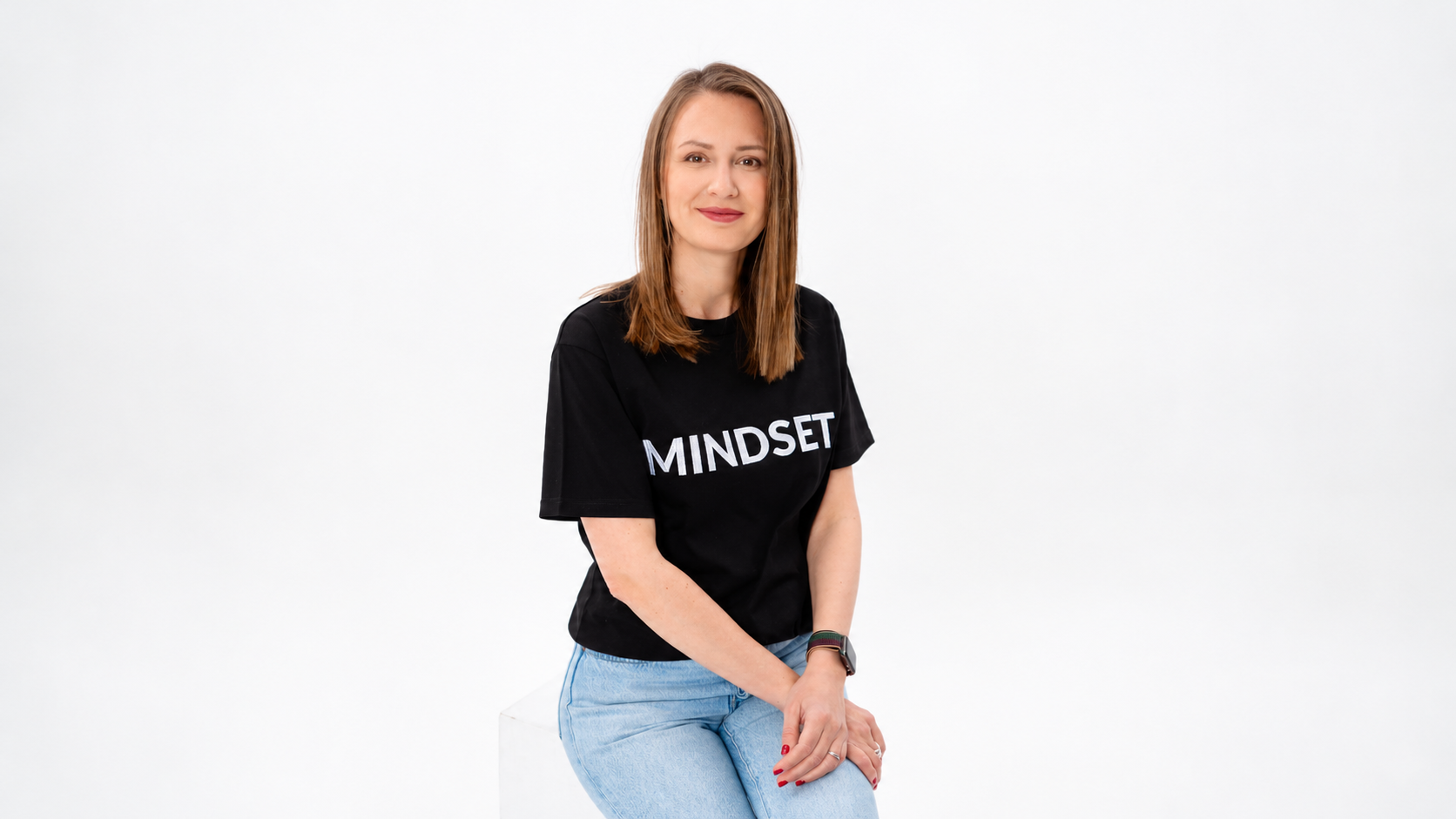
Not long ago, every third candidate made it past Natalia Edde’s first screening. Now it’s every fifth.
Edde is a Partner at Mindset an integrated marketing and communications agency for companies and brands scaling worldwide. Over the past five years, she has interviewed more than 500 candidates while building the agency’s team. I spoke with her earlier as we were researching industry salaries for Communicate’s 2026 GCC Advertising & Marketing Salary Survey, and she didn’t hold back on what’s shifted: pay pressure, burnout in candidates barely two years into their careers, candidates dialing into interviews from a park, and why she now hires for soft skills first.
What hiring trends are you seeing right now?
The first trend I see is that it’s getting harder to find PR talent. I’ve noticed that experienced candidates are switching to new roles that combine communications with marketing functions, while young professionals demonstrate lower motivation together with higher expectations. Probably it’s a Gen Z thing, but as a company we’re forced to adapt, and our recruitment conversion rate is getting lower. Before, every third candidate who passed the first screening moved to the next stage of the interview process; now it’s every fifth.
Are salaries moving?
Yes, we can’t ignore the growing inflation around the world. What helps us, though, is our remote business model, which allows us to recruit in other countries with more competitive salary levels.
Which roles are hardest to fill?
Senior roles that require the right mix of hard and soft skills to lead a team. It’s easier to recruit a person from outside the niche and coach them than to find someone with exactly the right set of skills, especially in the agency business, which is less attractive to senior candidates than in-house roles.
What’s happening with mobility and talent retention?
Remote work is now part of the package candidates expect. We see this as a benefit for us and keep this option open for newcomers.
Retention has also become harder. With all the layoffs in media and the impact of AI, the speed of work has increased, and I can’t say that the tools really help to optimize it. So candidates burn out faster, and the traditional motivation builders don’t work anymore. We have a multi-level motivation system that includes financial rewards and fast growth opportunities.
How has the conversation with candidates changed in the past year or two?
New candidates show less excitement about the tech industry we work in. Let’s say they are not looking for inspiring entrepreneur stories as often as before. I’ve also noticed that financial motivation more often comes first, ahead of the company’s mission and values. I also see a huge gap between how candidates perceive themselves and their actual experience and achievements. For example, I hear more candidates who have worked for only six months saying that they have already learned everything they could in that time. I also hear young candidates with only one to two years of experience talking about burnout much more often. I mean, I’m a millennial who started working at 18 and still haven’t experienced burnout.
What are candidates asking for now that almost nobody asked for two years ago?
How quickly they can get promoted. Before, candidates rarely asked about this, but now they want to see a real commitment from the company to their growth opportunities.
Have you walked away from a candidate over salary expectations?
Yes, this happens quite often. In the agency business, for example, it is especially important to be ready and able to do hands-on work, even in senior positions. I often see this with candidates coming from corporate comms roles who have mostly worked through agencies but still expect high salaries simply because of their corporate background. I think this is generally true of SMBs, which require more hands-on experience, and where candidates who look very strong on paper don’t always match expectations when it comes to their actual hard skills.
Do you test for AI fluency in interviews?
No. My personal opinion of AI in our profession is more negative than positive. At the same time, I see that younger professionals are very native in their use of AI, and often there is no need to explain to them how to work with it. But I never mind when a candidate uses every possible tool available to solve the task during our online test assignment. You would be surprised how many people don’t do this. For me, it shows that the candidate will be able to complete the task without needing my help.
What’s made someone stay when you expected to lose them?
Relationships built over the years and a sense of responsibility toward their peers and the final result. We invest a lot in our team, especially in developing peer-to-peer support. So when someone’s circumstances change, quite often it is the good relationships within the team that make them stay.
Do Gen Z candidates show up to interviews or negotiate differently from millennials?
Yes, absolutely. Gen Z candidates come to interviews more relaxed. They don’t always prepare, and they talk more about the perks of the job than about the results they want to achieve. They don’t want to achieve results at any cost and don’t see work as something important; for them, it is more of a resource than a tool for personal growth. At the same time, I often see quite a big gap between self-perception and reality. For example, a candidate with two years of total experience across five different companies may see that as already being a sufficient level of experience.
Is it harder to hire or to keep people?
Both. It has become harder both to hire and to retain people. The development of remote work and lower barriers for candidates allow them to change jobs more frequently, especially in the tech industry. At the same time, the trend toward fractional roles is also growing, allowing people to have more control over their time and how they distribute their resources. As a company, we have to invest more in internal culture and motivation and make compromises more often in order to retain people.
Have you lost a candidate to another agency, an in-house role or another industry entirely?
I haven’t, but we actually have the opposite success story: one of our employees, who previously worked as a lawyer, grew into a senior PR professional within two years.
What are you prioritizing in interviews now that wasn’t on your radar a year or two ago?
I’ve started prioritizing soft skills even more. I believe that it is much easier to teach hard skills to an employee with the right soft skills than the other way around. Result orientation and independence have probably become even more important to me, as I see these qualities less often in candidates now.
Has a candidate surprised you recently?
A candidate joining an interview on their phone from a park, or a candidate joining with the camera pointed at an unmade bed. And candidates who expect a promotion every six months.
(Wondering where your own pay sits against the market? Communicate’s 2026 GCC Advertising & Marketing Salary Survey breaks down what agencies and brands across the region are paying, role by role and level by level. Read the full findings HERE)