Food has never been just food. What we bring to the table says a lot about who we are and where we come from. Sometimes it’s a form of memory: if my mother trusted a brand, I carry that trust forward, almost as a duty. Sometimes it’s a declaration of identity. In a market as culturally layered as the UAE, three or four generations often share the same table, and their different codes of consumption collide, and coexist, daily.
As Chief Marketing & R&D Officer at Al Ain Farms Group, my job sits at the intersection of two questions: what do consumers want, and how do we build it? Noticing a shift is one thing; translating it into a reformulated recipe or new category takes a different kind of listening, one that tests and validates before reaching a shelf. Across dairy, poultry, and beverages, for a company that’s fed this nation for four decades, what earns a brand its place at the table depends on who’s sitting there.
Gen Z isn’t rewriting the rulebook in the margins: they’re writing an entirely new one, loudly and publicly. Before deciding whether a product tastes good, they ask harder questions: Is this brand acting ethically? Is it making a genuine social impact? Are the people behind it paid fairly? No generation before them has had the platform to make or break a brand’s reputation in real time. That’s a shift in the power balance between brand and consumer.
Millennials occupy a complicated middle ground: raised by Gen X parents who valued reliability and price, many now raise Gen Z or Gen Alpha children of their own, needing brands that make overstretched lives easier while reflecting their priorities around health, quality, and innovation. They haven’t abandoned their parents’ instinct for value; they’ve redefined it. Cheap isn’t good enough on its own; it has to be worth something beyond the price tag.
Then there’s Gen X, for whom the table is still a place of modernity balanced against family and practicality. This is a generation that rewards consistency: brands earn a permanent place by simply showing up, reliably, for years, same quality, same taste, same trust, delivered without fuss.
For a legacy brand like Al Ain Farms Group, this isn’t academic; it’s the reality of serving a country whose founding vision was to nourish its people with dignity and self-sufficiency. Meeting Gen Z’s ethics, Millennials’ purpose, and Gen X’s trust, often within the same household, requires a brand to be many things at once. We respond in three ways: through innovation, nutrition, and communication.
Innovation is where that translation from insight to product happens most visibly. This past year, we’ve partnered with Finnish food-tech company FoodIQ to bring clean-label, multi-layer cooking technology to the region for the first time. We’ve launched the UAE’s first sugar-free Greek yoghurt and juice ranges and introduced Al Ain Farms Kefir, the UAE’s first authentically made kefir, for a generation drawn to gut health. None of this is decorative: today’s consumers expect a brand to keep evolving its product, not just its advertising, and it only happens because we test, listen, and validate insight before we scale, treating R&D as the engine of relevance.
But innovation only earns its keep if it sits on a foundation that doesn’t move: nutritional integrity, food safety, and quality a household can depend on. That’s why we’ve committed to reducing added sugars by 10-20% across Al Ain Farms and Marmum Dairy products, as the first private-sector partner to Abu Dhabi’s Healthy Living Strategy. Consumers are quick to spot innovation used as a substitute for substance, and quicker to lose faith in a brand that tries it.
Today’s fragmented media landscape makes the job harder, and more interesting. There’s no single channel or tone that reaches everyone. Gen Z expects a brand to speak informally, transparently, often with humour. Millennials weigh convenience against values across social, retail, and digital touchpoints in the same scroll. Gen X still responds to consistency in packaging and word of mouth built over years. A brand serious about relevance has to show up authentically across all of these spaces.
One expectation cuts across every generation rather than dividing them: locally produced food. Gen Z sees it as sustainability. Millennials see it as freshness and quality control. Gen X sees it as the reliability they’ve always valued. For a company producing over 350 million litres of dairy and juice and 500 million eggs annually, almost entirely through a vertically integrated farm-to-shelf model, this convergence is a genuine strategic advantage. Local production is increasingly the trust signal, differing by generation but landing on the same conclusion.
The lesson isn’t to chase Gen Z at the expense of everyone else, nor to assume older generations are easier to satisfy. Authenticity, transparency, and purpose are no longer niche demands from the youngest consumers; they’re the baseline expectation across the table, simply expressed differently depending on who’s sitting at it. Brands that hold a single, honest identity while speaking fluently to each generation’s version of trust will keep their seat at the table, for this generation and the ones still to come.
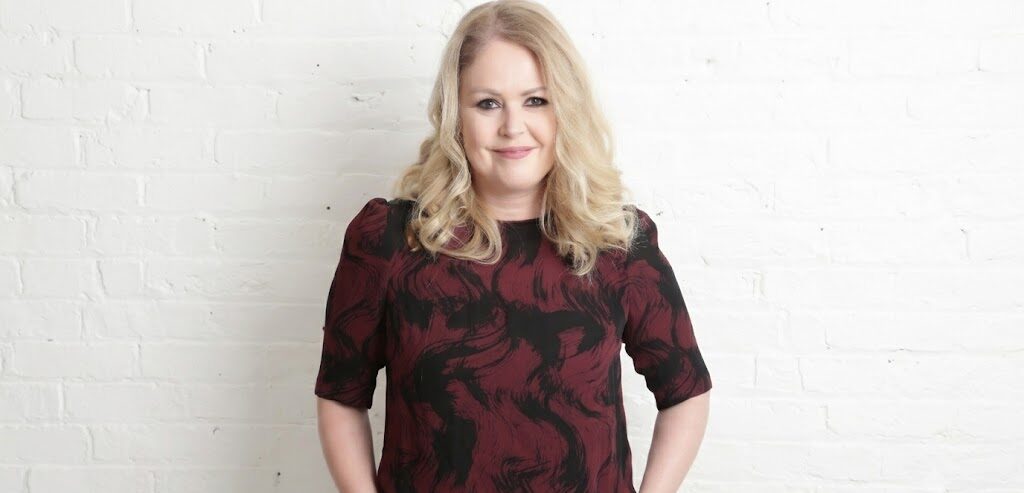
(Milana Boskovic is the Chief Marketing & R&D Officer at Al Ain Farms Group.)