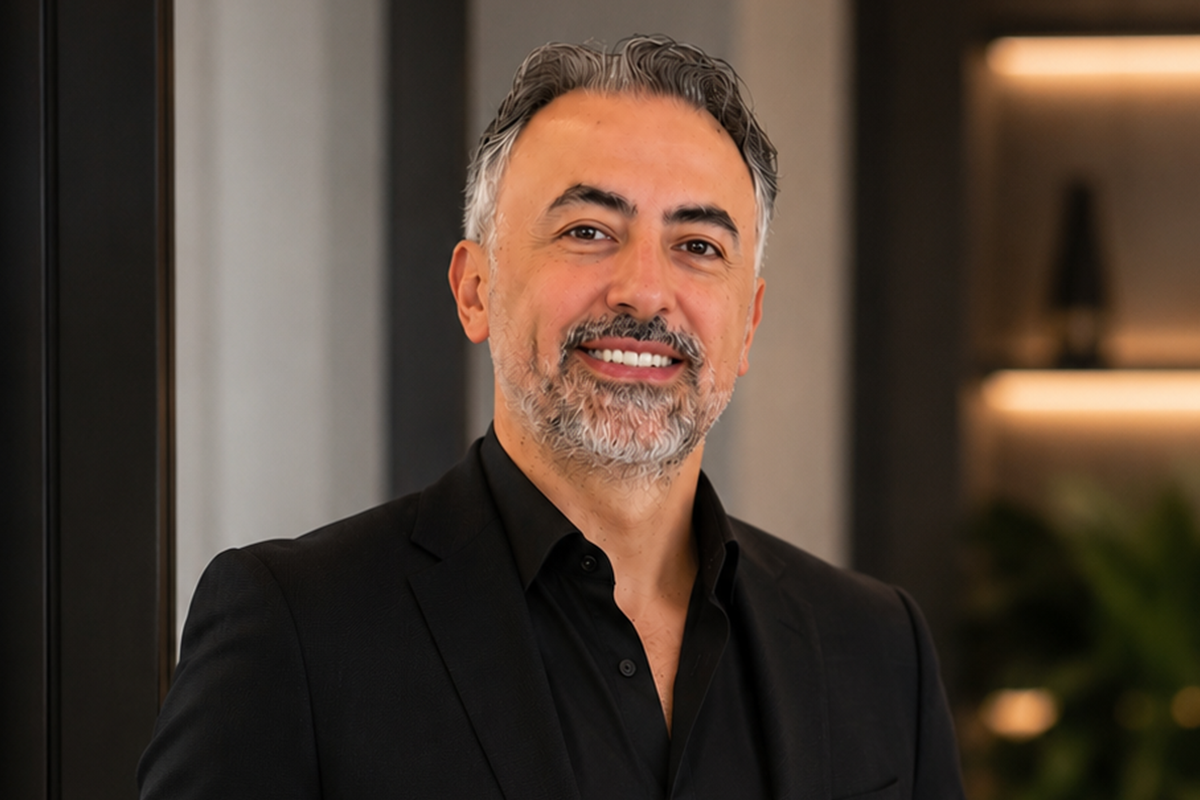
By Rabih Al Atat
For most of my career, out-of-home in this region worked on one simple rule: whoever owned the best location won. Secure the corner on Sheikh Zayed Road, build the biggest structure, and the skyline did the rest. That formula turned a handful of corridors in the Gulf into some of the most valuable advertising real estate anywhere in the world. And to be fair, it still works.
But the industry I walk into today is not the one I started in. Something has shifted over the last three years, and I don’t think we’ve fully admitted it to ourselves yet. OOH here is no longer just a real estate business. It’s becoming a data business. The operators, agencies, and brands who accept that early will shape the next decade of the medium. The ones who don’t will end up competing on price.
Look at what’s actually happening on the ground. Digital out-of-home is heading toward nearly half of all OOH spend globally by 2028, but the Gulf isn’t following that curve — in many ways we’re ahead of it. Saudi Arabia’s giga-projects are being built with screens embedded into them from day one. The UAE has near-universal 5G. Governments across the region treat digital inventory not as advertising furniture but as smart-city infrastructure, wired into mobility, retail, and tourism. No other market is expanding its canvas this fast. The question for our industry has changed from “where can we build?” to “what can these networks actually do?”
Now here’s the part that frustrates me, because I see it every single week. The inventory has evolved. The buying process hasn’t.
A planner can launch a programmatic video campaign across five markets before lunch. But try booking a cross-border OOH campaign in the GCC. It’s still weeks of emails, PDFs, phone calls, chasing availability from one supplier, specs from another, and a rate card that may or may not reflect reality. I’ve watched brilliant campaigns die in that gap — not because the client didn’t believe in the medium, but because the process exhausted them before they got there.
We need to be honest about what that friction costs us. Budgets flow toward channels that are easy to plan and transparent to price. Every hour a media team spends hunting down a quotation is an hour that quietly pushes spend back to social and search. That is the single biggest constraint on OOH growth in this region, and it has nothing to do with the quality of our assets.
The encouraging news is that the change has started. Programmatic DOOH is gaining real traction in the Gulf, and a new layer of technology is finally making inventory discoverable and comparable across suppliers and borders. Our market, with its dense digital stock and concentrated urban audiences, is actually better positioned for this shift than markets still dragging decades of static inventory behind them. We can leapfrog. We just have to want to.
And the creative side gives me real optimism. Some of the most ambitious OOH work in the world is coming out of this region right now — anamorphic 3D builds, creative that responds to weather, traffic, and cultural moments, Ramadan campaigns designed to be filmed and shared as much as seen. That’s the version of the medium worth fighting for: screens that are alive, aware of their context, and part of a connected journey rather than sitting outside it.
So what needs to happen next? Three things, in my view. Transparency — inventory, pricing, and availability should be as easy to find in OOH as in any digital channel. Standardisation — a GCC-wide campaign should be one plan, not five separate negotiations. And openness — media owners, tech platforms, and agencies building interoperable systems instead of walled gardens.
The Gulf has already proven it can build the world’s most spectacular OOH assets. The harder, less glamorous work is building the smartest ecosystem around them. We have the infrastructure, the capital, and the ambition. What we’re missing is the connective tissue — and the willingness to make a legacy medium behave like a modern one.
(Rabih Al Atat is the Co-Founder and CEO of MediaXNetwork (MXN), a UAE-based media technology platform simplifying the discovery, planning, and buying of out-of-home media across the region.)