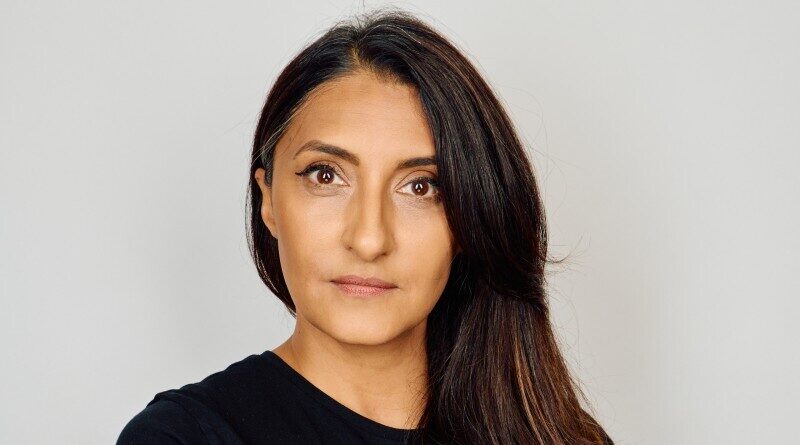
Sitting down with Communicate after a packed day of meetings at the Web Summit in Doha, Resh Sidhu doesn’t hesitate when asked to fast-forward to 2030. The Senior Global Director, Innovation, Specs & Lens Studio Marketing at Snap Inc., paints a world where computing becomes almost invisible, and where brands have completely rethought how they show up in people’s lives.
“For us at Snap, we’ve always been a company that’s been about making computing feel more human. It was actually the philosophy that’s been driving Snapchat from day one, and that transcends into Specs,” she said.
In Sidhu’s 2030, people are more connected to real friends and family, not because they use more devices, but because they need fewer.
“We no longer need our devices. We no longer need those devices because we have Specs,” she explains. With consumer launches kicking off this year, she sees 2026 as the critical mass that will change how people think about computing. The promise is simple but radical: you and a friend can stay present in a conversation while technology quietly powers what you need in the background, instead of pulling you away.
Wearables as the next default interface
Wearables are not new, and Sidhu readily lists the last decade’s experiments, from rings to wristbands to the Apple Watch. But she believes the next wave will be defined less by tracking and more by how it fits our existing habits.
“I think people are asking for, yes, more technology, but not more technology that requires them to look down, not more technology that makes them have to be distracted from what’s happening,” she said.
“So wearables become incredibly exciting because it’s a form factor we understand.”
Snap has already built five generations of smart glasses over more than a decade, a long-term investment she describes as “true innovation.” The point, she notes, is not chasing a fad but backing a conviction that intelligence can live in eyewear, not just in a slab of glass.
What this means for brands and CMOs
Sidhu’s role is to help brands see the opportunity in this shift, and she’s animated when the conversation moves to marketers.
“My job is to help brands understand the possibility that they have here,” she said. “What we’re finding is the most innovative brands in the world are ready because they know there’s a shift happening. Consumer behavior is changing. People don’t want to look at their phones anymore.”
That poses a direct challenge to traditional digital marketing. If consumers aren’t looking at their phones, how do you still earn attention, build brands, and drive sales? For Sidhu, Specs is “an incredible new platform to bring your brand story to a whole new generation,” including a cohort that may barely use mobile phones at all.
She argues that brands need a spatial strategy: “Audiences no longer want to be targeted. They want to be included in an experience. They want to be part of that experience in the moment when it’s relevant to them.”
Her message to CMOs is blunt: “The future of computing is here right now. If you are an innovative brand and a leader and want to be first to market, come work with Snap and help us reimagine what that means for your brand.”
This era, she adds, will reward brands “brave enough to take that leap and explore and learn with us and iterate with us.”
Everyday moments, reimagined for CPG
For fast-moving consumer goods, Sidhu sees especially rich potential. CPG might not have the sheen of luxury or sports, but in her view, that’s exactly why the category often leads in innovation: brands must work harder to stand out.
She argues that for CPG brands, the beauty of Specs is that they are built to make the everyday better. “I see something and I’m interested to know, what is it? How can I get it? And specs enable you to improve those everyday moments when you need them. … One of my favorite examples is the ability to open your fridge, see a range of goods, and say, ‘Help me create something nice for dinner tonight.’”
She takes the point further: “I don’t need to reach out for my phone. I don’t need to go to a YouTube video or find an Instagram recipe… Everyday moments, transformed. That, to me, is the beauty of what Specs can do. It keeps you in the moment, in life. And that’s what great technology does. It’s invisible until the moment you need it, and then it’s there.”
Redefining effective marketing and ROI
CPG marketers are famously obsessed with reach and ROI, but Sidhu argues that effectiveness is shifting toward presence and relevance. Snapchat already reaches close to a billion people globally, offering both scale and engagement. On the platform today, augmented reality experiences and AI-powered lenses perform strongly because users “want something fun” and timely that feels relevant to them.
She expects the same logic to apply to specs: brand experiences must be built from a deep understanding of who is buying the glasses and what they want to do in their everyday lives. Effective marketing in this new world will mean meeting people in their context, not dragging them out of it.
The future of entertainment and commerce
Entertainment is one of Sidhu’s favorite use cases. With Specs, viewers remain in their own environment yet can step “inside” the stories and IP they love. “There’s a huge opportunity to reimagine the future of storytelling,” she says. Rather than going somewhere to watch or experience content, entertainment can come to you, indoors or outdoors, whenever the desire hits.
The same is true for shopping. She jokes about seeing an outfit she likes and instantly asking, “Where did you get this from?” Specs could identify the items and add them to a basket in the moment. “It’s not futuristic. It’s going to happen. It’s happening right now,” she said. “That’s the reality that excites me the most when people realize that technology is living up to the dream.”
MENA’s appetite and Gen Alpha’s power
Speaking in Doha, Sidhu is clear about the region’s importance. She said she has been “blown away by the excitement and the magnitude of passion and desire to be innovative, do something different.” She expects Specs to be a global phenomenon, but sees strong demand across the Middle East once consumers get to try the product.
On the demographic front, she highlights Gen Z and especially Gen Alpha, drawing on her experience as a parent of one child from each cohort. “I absolutely will say this is made for Gen Alpha,” she said. “They’re beginning to push away from mobile, from traditional types of experiences, and they want experiences that actually allow them to be more present.”
By 2030, she believes this generation will transform how we all interact with technology and fully enjoy the work being done on Specs today.
For CMOs and brand leaders across MENA and beyond, her closing challenge is simple: “You have to be thinking about that now. What does it mean? What is your wearable strategy? The future of computing is here, and that means wearable.”