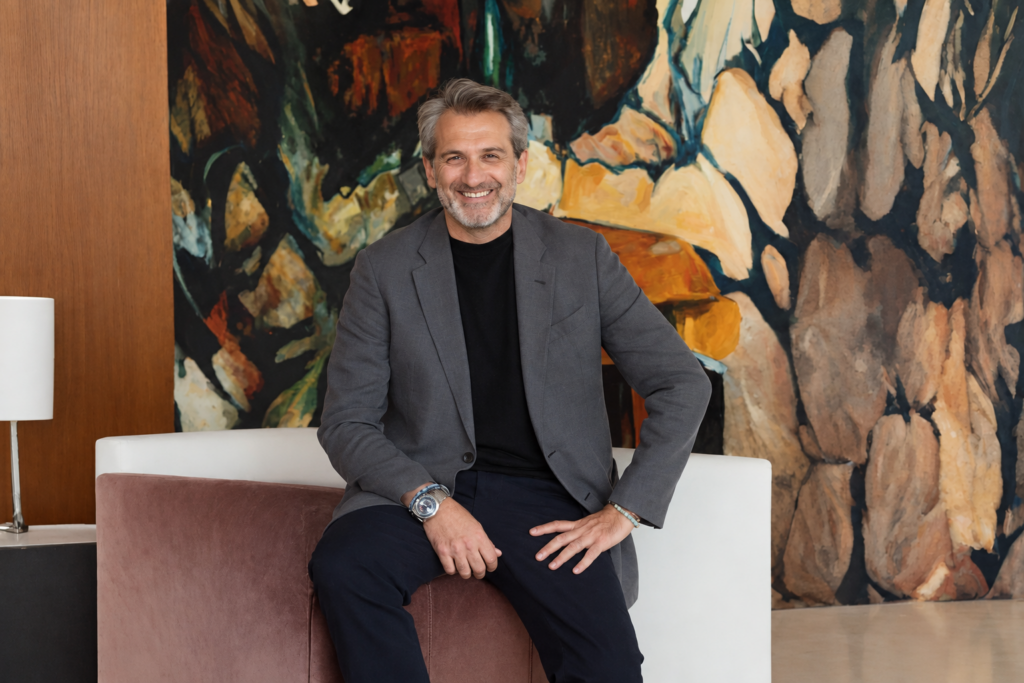
Reim El Houni
I have spent a great deal of my career training leaders how to show up in the media, how to navigate challenging questions, stay on message, and hold their composure when the stakes are high. One of the statistics that always surprises people in my media training sessions is that words make up just 7% of communication, while tone of voice accounts for 38% and body language 55%. Whether or not people know the numbers, they feel the truth of it instinctively: how a leader shows up often communicates more than the words they say.
It is about tone, pace, posture, facial expression, presence, and the emotional cues you send before people have even processed what you have said, and in sensitive moments, that matters even more. Because when uncertainty rises, people do not just listen to leaders for information. They look to them for cues. How should we respond? How should we interpret this? How should we feel?
That is why visible leadership matters so much.

Over the past week in the UAE, Her Excellency Reem Al Hashimy has offered a compelling example of what visible leadership looks like in practice. Having watched her closely during Expo 2020 while producing a daily live TV show, and later hosting her in our studio, I had already seen her presence up close. But watching her more recently, what has stood out is not just what she has said, but how she has said it: with calm, clarity, confidence, and a steady sense of control. In moments of uncertainty, that kind of presence matters. It shapes how people receive information, how they regulate their emotions, and how much trust they place in the message. Had that tone been louder or less composed, the effect could easily have been the opposite.
That is the power of visible leadership.
It is also a power I have come to understand deeply throughout my own career in television. Having spent the majority of my career in TV studios and galleries, working behind the scenes and directly supporting presenters, personalities, and professionals in front of the camera as they deliver critical information, I have seen firsthand how much a leader’s composure shapes the people around them.
One thing you learn very quickly is that when things go wrong, what keeps everything on track is not the chaos around you, but how you react and how you respond. Your entire team takes that cue from you, both behind the camera and in front of it.
What has helped me throughout my career is understanding the importance of being slow, methodical, and measured during sensitive times. It is about not jumping, but clarifying. It is about recognising that every behaviour, every action, and every nuance has an impact on the people taking their cues from you, whether that is through the media, through your own social platforms, or through your leadership inside an organisation.
That applies just as much to brands and business leaders as it does to individuals.
Over the past week, I saw a number of brands clearly unsure how to communicate. My biggest advice is that this is the time for complete authenticity and relatability. You do not need to comment on everything, but you do need to show that you are in touch with the sentiment around you. You cannot be tone-deaf and continue with your content plan as if nothing is happening. There has to be a shift in your sensitivity and a shift in your focus.
For brands and marketing leaders, that shift does not need to be dramatic, but it does need to be intentional. It may mean pausing scheduled content, relooking at tone, giving your leadership team greater visibility, or asking whether what you are putting out right now is adding value or simply adding volume. In sensitive moments, relevance, restraint, and humanity matter far more than perfect messaging.
During this period, I have consciously chosen to focus more of my content on emotional storytelling because that is what people connect with. In moments like these, people are not just looking for information. They are looking for humanity, reassurance, and something that feels real.
A recent example of this for me has been our YouTube and OSN series Ditch the Silver with Arva Ahmed. In the middle of a week dominated by conversations around unrest and safety, we chose to tell a different kind of story; one rooted in the lived reality of Dubai during Ramadan. It was a story about faith, generosity, and community, including the remarkable fact that 7,000 people are fed free of charge every day on the streets of old Dubai.
What mattered was not just the subject, but the shift in lens. Instead of amplifying anxiety, the piece reflected the soul of the city and reminded people of the values and traditions still unfolding around them. When I shared a clip from the episode, the response was immediate and widespread, including from prominent UAE leaders. One message I received thanked me for “showing the world my country and the harmony among its people.”
That response reinforced something I believe strongly: in sensitive moments, the most powerful stories are often not the loudest ones, but the ones that help people reconnect with place, perspective and each other. The same principle applies to brands.
It may also be an opportunity for brands to create campaigns and for leaders to visibly show the impact their business can have. We have been fortunate to work with Donna Benton, CEO of The Entertainer, who took to her social media over the weekend to announce their campaign, Our Home, Our Heart, and shared that 50,000 Entertainer One Heart memberships would be distributed over the coming week to support local businesses and the people behind them.
Seeing an initiative like that introduced by a brand that is part of people’s everyday lives, and seeing Donna herself step forward to share it, also speaks volumes. You could immediately see and hear how connected she was to the initiative. That kind of visible leadership creates a ripple effect. It shows other organisations and brands how their leaders can show up more visibly, more authentically, and more usefully in moments like these.
Because not every story needs to address the crisis directly. Sometimes the most powerful thing storytelling can do is remind people of who they are, what they value, and what still holds them together.
That is the role of visible leadership and authentic storytelling in sensitive moments. Not to be louder or performative or chase attention.
But to create calm, clarity, trust, and connection when people need it most.