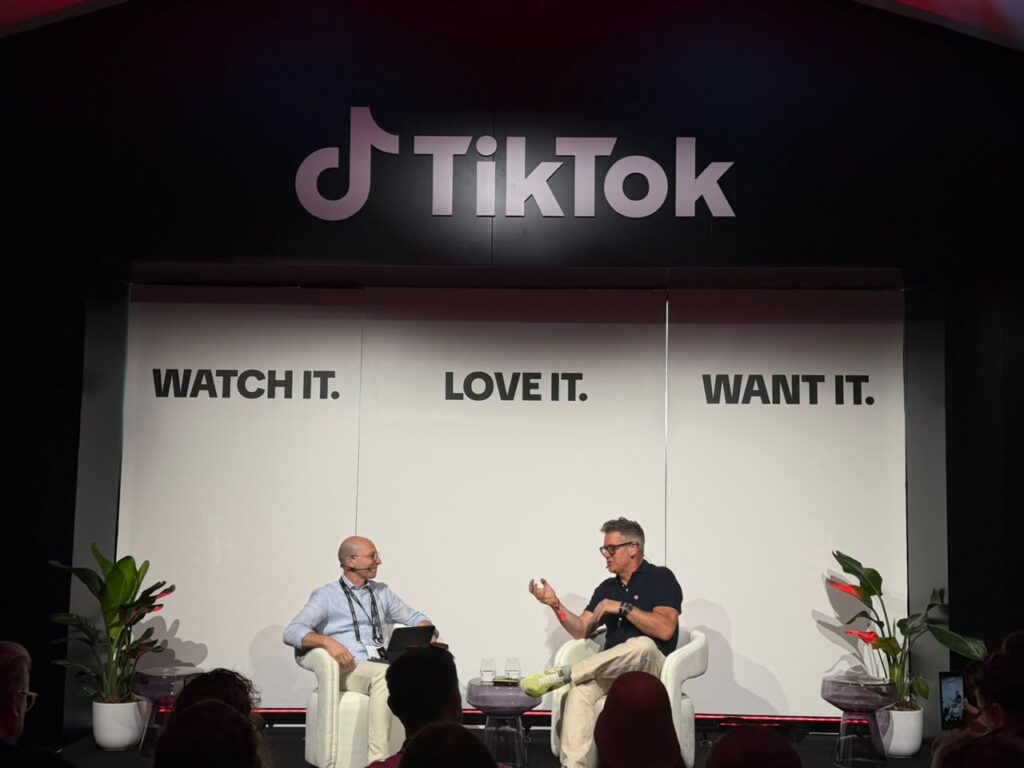
As part of LinkedIn’s brand activation at Cannes Lions 2026, a group of CMOs gathered on the rooftop of The Carlton for a session titled Winning the AI Discovery Era: Marketing to Minds and Machines. The panel brought together Colin Fleming (OpenAI), Lorraine Twohill (Google), Carla Hassan (JPMorgan Chase), Shiv Singh (Savvy Matters), and Jessica Jensen (LinkedIn) for a candid conversation about what AI is changing in marketing — and what it isn’t.
The Shift from Attention to Usefulness
A theme that ran through much of the conversation was the idea that marketing is moving from an attention economy to what Colin Fleming called an intelligence economy. The old game was about grabbing attention and the new one is about being genuinely useful at the right moment. With roughly 20% of ChatGPT usage carrying direct commercial intent, the opportunity for brands to show up meaningfully during the decision-making process is real — but so is the pressure to earn that moment rather than just interrupt it.
Discovery Isn’t Linear Anymore
The panel spent considerable time on how consumer behavior is changing. Lorraine Twohill shared that Google is seeing search queries up to 3x longer than they used to be, with follow-on queries up 40% — signs that people are going deeper, asking more, and moving across multiple touchpoints before making a decision. Shiv Singh added that in LLM environments, the journey from awareness to action is compressing rapidly, and brands can no longer predict with confidence how or where they’ll show up. He pointed to brands like TurboTax that built themselves as answer engines early and are now outperforming in AI-driven results — a heads-up for anyone still relying on traditional approaches to visibility.
Curiosity as a Competitive Advantage
Across the conversation, curiosity kept coming up as the skill that separates teams that are thriving from those that are stalling. Colin Fleming described building a synthetic market research environment over a weekend by connecting AI tools to existing company data — something that would have taken a year through traditional methods. The point wasn’t the technology itself, but the willingness to ask imaginative questions of it. Lorraine Twohill noted that some of the most capable people in this moment aren’t the most senior — junior team members who are comfortable experimenting are often moving faster than leadership, which creates its own interesting dynamic.
The Human Side of the Transition
Underneath the excitement, the panel was honest about the anxiety that comes with this level of change. Shiv Singh described a shift in work identity — people aren’t just worried about job security, they’re worried about whether their role will carry the same meaning it once did. Lorraine Twohill raised a specific concern about women being less engaged in the AI moment than men, and made a direct call for leaders to actively bring people along rather than waiting for organic adoption. Carla Hassan grounded it in a practical example: a young engineer at JPMorgan Chase who had spent months struggling with a data project was given access to AI tools and within five days had built something that fundamentally changed how she saw her own potential.
Building Teams That Can Actually Adapt
On the practical side, the conversation coalesced around the idea of giving teams structure without stifling experimentation. Lorraine Twohill described it as “freedom within a framework” — clear guardrails, sanctioned tools, and training that lets people explore without fear of getting it wrong. Carla Hassan talked about creating sandboxes where JPMorgan Chase teams could work with dummy data in a safe environment, which turned cautious employees into internal advocates. The broader point was that top-down permission to experiment matters as much as the tools themselves — and that leaders who aren’t modeling the right mindset risk leaving their organizations behind.
What It Takes to Win
The theme across everything discussed was that winning in an AI-integrated world isn’t just a strategy problem — it’s a people, culture, and leadership problem. Carla Hassan argued that the people best positioned to lead through this moment are the ones who can connect dots across silos, think about business outcomes, and collaborate without staying in their lane. Shiv Singh put it plainly: an organization’s AI readiness is only as strong as its least-engaged member. The opportunity is real, but so is the work of bringing everyone along to meet it.