By George Maktabi
The Industrial Revolution had it easy. One name, coined once, and it held for two centuries. Steam, steel, factories. We knew what we were living through, even if we argued about what it meant.
Our era can’t seem to settle on a name. In the past few years alone, I’ve come across the AI knowledge economy, the attention economy, the intention economy, the intimacy economy and, most recently, the curiosity economy. Every few months, a new label arrives claiming to finally describe what’s happening to us.
Why can’t we agree on one? Part of the answer is speed: things are genuinely evolving faster than language can keep up. But I suspect there’s another reason. Naming an economy is not a neutral act. Whoever names it gets to define what’s valuable in it, and there are too many interests at stake, from platforms and advertisers to AI labs, publishers, and all of us in the agency business, for any single name to go uncontested. A name is a claim on the future, and everyone wants to make that claim.
But strip away the terminology and something constant sits underneath all of them: the commodification and monetization of information. That’s the thread. The attention economy commodified information about what we look at. The intention economy commodifies information about what we want. The intimacy economy commodifies information about what we feel. Each new “economy” is simply the same machine reaching deeper. The name changes; the logic doesn’t.
The great inversion
To see where this is heading, it’s worth reading a recent essay by Shuwei Fang at Harvard’s Shorenstein Center. She describes a fundamental inversion in how information flows. For all of media history, humans were the readers: publishers produced, platforms ranked, and people consumed. That order is flipping. Today, machines are becoming the primary consumers of content. AI systems ingest the world’s information, process it, and generate what humans actually see. The original article, the original post, the original ad becomes raw material for a machine, not a message for a person.
This inversion rewrites the economics of our entire industry. When AI can generate infinite content at almost no cost, content itself gets commoditized, and value migrates to whoever controls how information is found, interpreted and delivered. It happened to music when copying became free and Spotify captured the value through access. Fang argues information has now hit the same inflection point: the power is moving from those who make content to those who control its synthesis.
And within that shift sits her most original idea: what she calls a curiosity graph. Unlike social media’s interest graph, which tracked what captured our attention, this is about our questions. AI assistants with persistent memory, she writes, are “mapping the evolution of your questions over time.” With every interaction, the machine deepens its understanding not only of what we know, but of what we haven’t yet thought to ask. Our wondering itself becomes the asset.
Sit with that. For twenty years, our industry fought for seconds of attention. The next fight will be over the question itself, the moment before a person even knows what they want. Advertisers today bid on keywords you’ve already searched. Tomorrow they may bid on making you curious about something before the thought is fully yours. That’s not persuasion as we’ve known it. It’s anticipation.
Whose curiosity, whose language?
For our region, this carries a question of its own: who will build the infrastructure that shapes what Arab audiences ask? For two decades, we were consumers of attention platforms designed elsewhere, our feeds ranked by algorithms trained mostly on other people’s languages and lives. If the same happens with the curiosity economy, the questions of more than 400 million Arabic speakers will be anticipated, shaped and monetized by systems in which they barely exist as data.
This is why what’s happening in Saudi Arabia deserves close attention. Humain, the AI company launched under the Public Investment Fund, has built ALLaM, an Arabic-first large language model trained on the largest known Arabic dataset, and released Humain Chat, designed, in its own framing, for the hundreds of millions of Arabic speakers long underserved by mainstream generative AI. The direction matters: it’s the first serious attempt from within the region to own a layer of this new infrastructure rather than rent it. The stakes go beyond national pride or economics. In an economy built on questions, whoever builds the systems our audiences converse with will shape the curiosity of a generation, in its own language, or in translation.
What changes, and what doesn’t
For the creative industry, the mechanics change profoundly. The first audience for our work is increasingly a machine that decides whether a human ever sees it. Winning a place in the answer is becoming as important as winning a place in the feed.
But here I want to push against my own industry’s instincts. We are addicted to declaring that everything has changed. And this applies to other industries. Our sense of accomplishment is tied to change; nobody builds a career on announcing that things remain the same. It takes more courage, oddly, to say that some things are fixed.
And some things are. The craft of a story that moves someone. Taste. Trust. Curiosity itself. It predates every one of these economies and will outlast whatever we call this one. The machines are not creating curiosity; they are learning to harvest it.
Perhaps that’s the answer to the naming problem. We keep inventing new terms because we keep describing the harvesting technology. The crop has never changed. Our job is to make sure that in an economy built on our questions, we remain the ones doing the asking
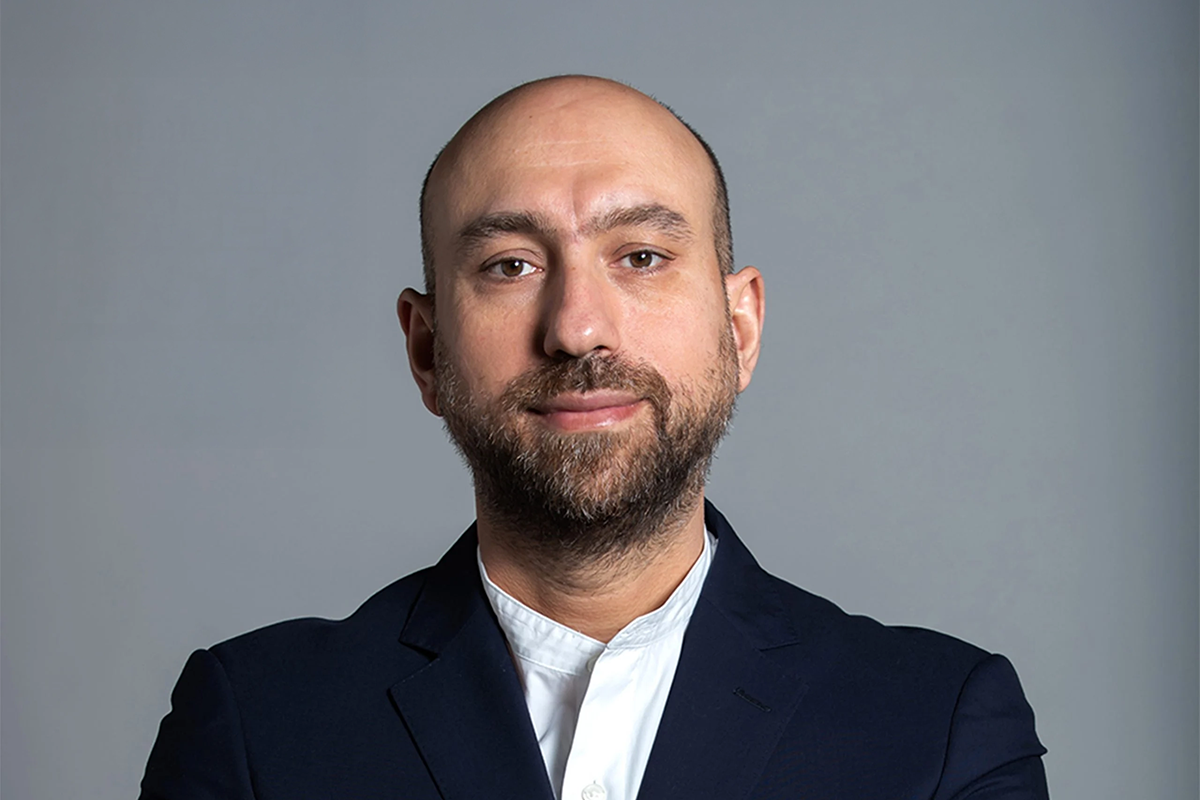
(George Maktabi is the group CEO of Webedia Arabia.)