I’m very fortunate to have had a career in roles where I had no idea what I was doing and neither did anyone else.
At future-oriented organizations such as SONY, Samsung, LEGO, IDEO, I was responsible for designing and leading novel innovation projects in multiple categories.
Why do I say no one had any idea? Well, if you’re introducing really new products that combine emerging technologies for fresh use cases, there are no market reports you can buy about price/performance ratios, no industry experts delivering keynote speeches on the subject, and no self-appointed Instagram gurus posting lists of the “six ways to succeed with this product.” (but you have to DM and follow them first).
Ironically, this frank acknowledgement meant there was no need to pretend you were clever, or feel the pressure to leap to a quick “right answer” to impress the client or your boss. In this column the right answer will be a sardonic phrase that refers to a company’s (or a leader’s) quick generic response to what they haughtily believe the customer wants. Too often this is a variation of:
“We will offer an excellent product at a reasonable price with customer service in everything we do.”
This answer is ‘right’ but meaningless. This ‘strategy’ is thrown down the hill to lower levels of the hierarchy who are expected to execute as if their jobs depend on it (and it does). It is understandable they become stressed trying to please both ‘The Boss’ and a wily customer who is indifferent to the politics you must deal with. They might come up with specifications and communications pleasing no one, to which the customer just says, “Well, what’s new?”. The company continues to block its ears against the warning sirens of a rapidly changing reality. These ‘right answers’ have been based on years, maybe decades, of success and with this comes a mighty pride that the boss understands what the customer wants, even more than the customer themselves.
Many of these organisations disappeared under the waves. Addicted to their dogma, they sang the company song in unison, that they were right all along even even as their ship sank. Yet, others faced reality painfully and made themselves rapidly reorganise to come back as different cultures, SONY being one of them
(BTW, I strongly recommend an article named “Who Killed Nokia? Nokia Did” by Quy Huy, an INSEAD Professor of Strategy. Be sure to give a copy to your boss…available online).
So, what did we do? We took a step back and employed the 5 stages of design thinking to reveal ‘questions for innovation’ that no one had thought of before.
This cannot be overstated: finding a question revealed by insights observed by no one else in your category is a key to innovation and competitive advantage.
It used to be that having knowledge that others didn’t (either as a company or as an individual) would differentiate you.
Yet knowledge today is essentially free. Anyone can get a PhD level answer from multiple AIs (And … wow! Don’t our decks suddenly look amazing?!).
Since anyone can provide knowledge, the question that you ask becomes your differentiator.
Here are some examples even before AI:
How can I access a thousand songs just using my thumb?
If you hold any device, only your thumb is free to move. After 50 years of dominance by the SONY Walkman, Apple destroyed them by building on this observation to create the iPod.
Why do I have to wait on the side of a road looking for a taxi when my phone knows exactly where I am?
Realizing that the accuracy of a phone’s geolocation could be built on, it created an entirely new Uber economy worth billions.
Why do I have to buy a song forever if I just want to listen to it only once now?
Spotify and others realized that with digital streaming, the owning of something, which perhaps gave you a sense of pride when we had CDs and vinyl records, had less meaning in a digital world than being able to access something right now.
Hence in this bi-weekly column we will be looking at what questions are critical for you in emerging areas of media and communications.
Every 2 weeks:
- We will deep dive into a topic to uncover some potential insights
- The column’s takeaway will be innovation questions for you to reflect on. Not to answer reflexively, but to consider what other questions you can infer from them that will provide your objectivity.
- The goal is to clearly differentiate your thinking versus others.
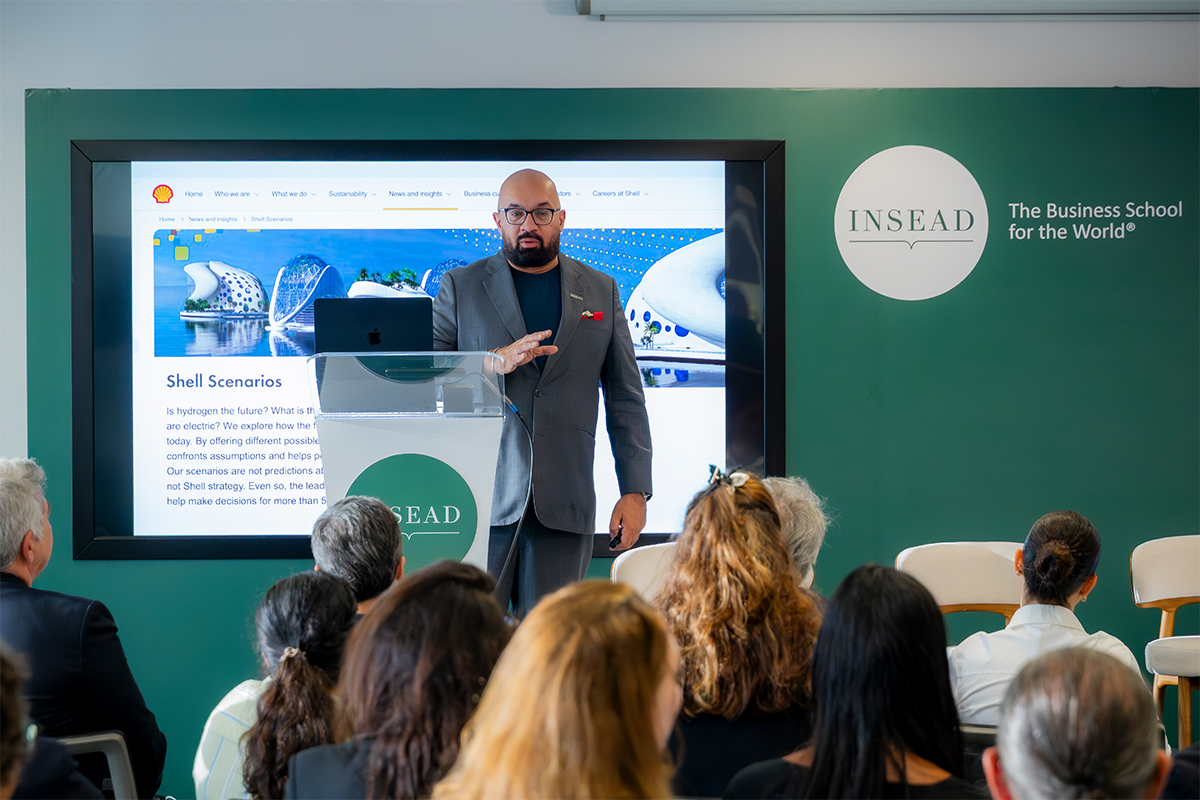
This column builds on the ideas explored during Anand Vengurlekar’s session, “Build it and they will come,” at Rewiring Growth & Marketing Strategy, a forum organized by Communicate in collaboration with INSEAD. Stay tuned for upcoming opportunities to explore practical innovation techniques, including ‘Apple’s & IDEO’s Design Thinking with AI’, ‘Jobs to be Done (JTBD) Brainstorming,’ ‘Critical Thinking with AI’ and ‘Avoiding Groupthink in High-Pressure Meetings.’
See you in the next edition!
Anand
Excuse my humanity, written without AI
(Anand Vengurlekar is an award-winning Senior Lecturer in Innovation and Design Thinking at INSEAD, Bayes Business School, IE/FT, PWC, Korn Ferry, and others. He focuses on mentoring individuals & teams to be more innovative under stressful circumstances and high-pressure deadlines. He has been teaching for over 10 years after a career in innovation at LEGO, IDEO, SONY and Samsung and has his Global MBA from INSEAD. He has delivered multiple programs at Etihad, Dubai Chambers, PMI, Tawuniya, Tiffany’s, Boeing, NEOM, and several Federal Ministries, luxury brands and banks across the region. He is British, drinks English Breakfast Tea properly (with chocolate biscuits), has a career across 8 countries in 4 continents and is based in Dubai.)