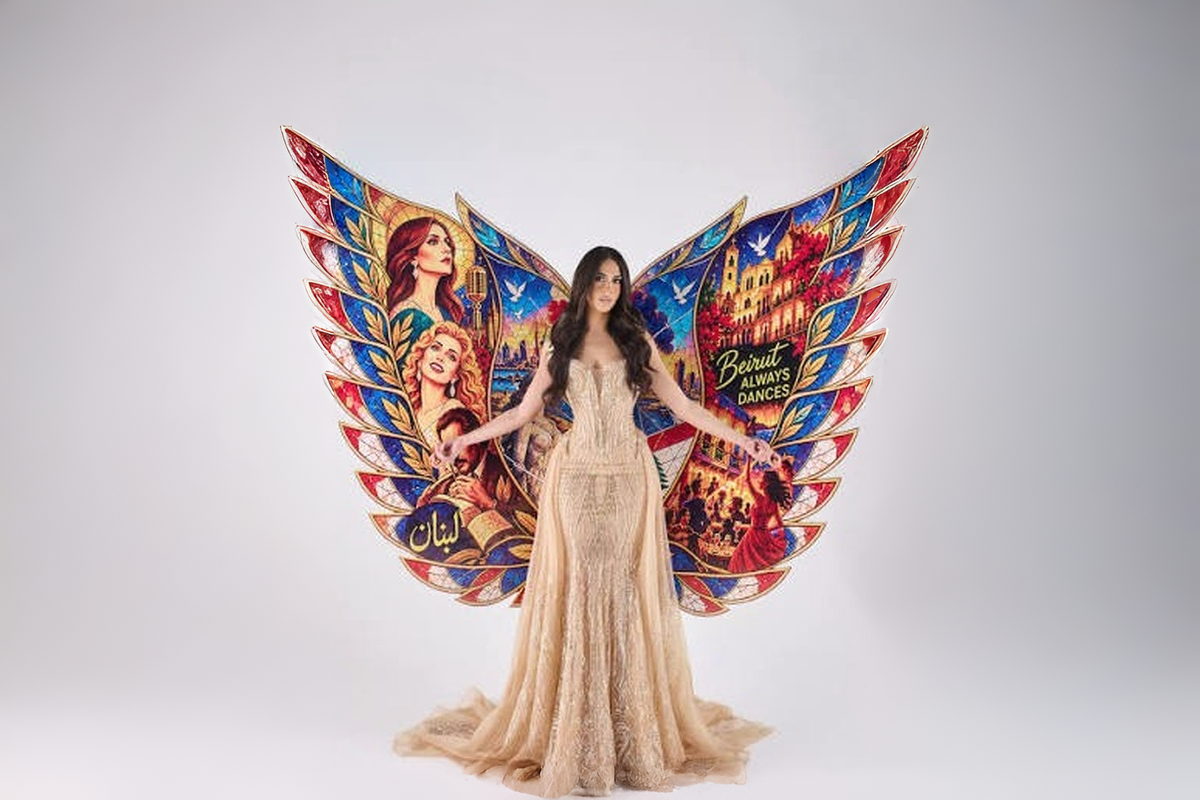
Miss Lebanon Perla Harb has faced criticism on social media over her national costume at the 2026 Miss Universe competition, with viewers questioning its design and alleging that AI-generated images were printed on a foam board used in the outfit.
Titled ‘Wings of a Nation’, the costume was presented during the national costume competition on November 21 in San Juan, Puerto Rico. It was designed to showcase Lebanon’s cultural heritage, history and national identity.
Harb wore a long gold dress designed by Hanadi Abboud, paired with oversized wings created under the artistic direction of Lebanese filmmaker Joe Bou Eid. The wings featured the colours of the Lebanese flag and images of prominent Lebanese personalities, including singers Fairuz and Sabah and writer Gibran Khalil Gibran. They also incorporated musical instruments, scenes of Beirut and other cultural references.
However, photographs and videos of the outfit triggered criticism online, with some viewers describing its execution as disappointing. One social media user, Paul Abi Hayla, called the design ‘shameful’, alleging that an AI-generated collage had been printed on a foam board and used as part of the costume.
Another user, Ali Mezher, described the outfit as a ‘disaster’ and questioned the people responsible for its design, particularly after Harb had received positive reactions in Lebanon ahead of the competition.
The criticism also focused on the absence of prominent Lebanese fashion designers such as Elie Saab, Georges Hobeika and Zuhair Murad from the project.
Responding to questions about their involvement, Harb reportedly said she would have liked to work with some of the country’s leading designers and had attempted to contact several of them but did not receive a positive response.
Despite the backlash, the costume was intended as a tribute to Lebanon’s cultural identity and resilience. Its design drew inspiration from traditional Lebanese architecture and stained glass, while also incorporating a reference to the 2020 Beirut port explosion, which killed more than 200 people.
The phrase ‘Beirut Always Dances’ was another element of the presentation, reflecting the city’s enduring association with music, art and cultural life.
While the concept sought to celebrate Lebanon’s history and ability to overcome adversity, its execution has become the subject of debate on social media.