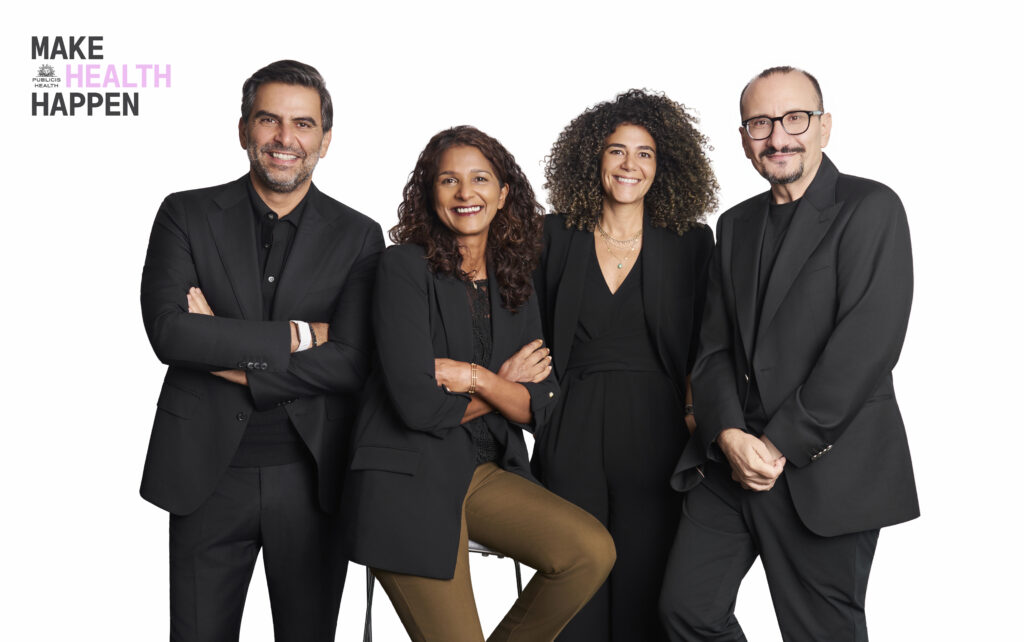
Business-to-Person is a simple shift in thinking, designing experiences for people first, not categories.
By Joel Barsch
For years, marketing has treated B2B and B2C as two different creative worlds. One was expected to be rational, structured and ROI-driven. The other was allowed to be emotional, cultural and bold. Separate teams. Separate briefs. Separate budgets. But the reality is, audiences don’t live that way anymore.
We now operate in a single, shared attention marketplace. The senior decision-maker attending a product roadshow is the same person scrolling TikTok at night, binge-watching Netflix, or queuing outside a pop-up experience. They don’t switch off their expectations when they walk into a conference hall; they still want to feel something. They still expect quality, storytelling and relevance. That’s why the traditional B2B/B2C divide is becoming counterproductive.
Historically, B2C led with creativity and cultural fluency, but sometimes lacked operational discipline. B2B excelled in rigor and detail, but too often produced predictable and uninspiring environments. Today, neither approach works in isolation. The brands winning attention are blending the best of both.
Business to Person
We call it B2P – Business to Person. It’s a simple shift in thinking, designing experiences for people first, not categories.
We recently delivered a five-city European conference roadshow for a global commerce brand. On paper it followed a traditional B2B format – keynotes, partner showcases, product demos and networking – but the experience was designed with a more cultural lens: lounge-style staging, immersive content environments and digital-first interaction points that encouraged participation rather than observation.
Behind the scenes, modular touring kits and scalable scenic systems allowed the event to flex across different venues and cities, creating a consistent but adaptable experience designed to drive both engagement and measurable outcomes.
What’s changed isn’t taste but expectation. Experiences once associated with consumer brands are now the baseline everywhere. A conference keynote is measured against a live show, an exhibition stand against a pop-up installation – every brand moment competes with the best experiences people have had anywhere.
At the same time, consumer marketing has been forced to grow up. Budgets are scrutinized. Measurement matters. Creativity without delivery, or spectacle without substance, no longer survives. The rigor traditionally associated with B2B is now essential to consumer work as well. This is not a blurring of lines. It’s a collapse of a false binary.
Mindset shift
Every brand experience today competes for the same finite resource: human attention. And attention is not won through category logic. It is earned through relevance, emotional resonance and trust, and is sustained through consistency and executional excellence.
Ever-evolving technology and the rise of AI have rewired how people consume content, discover brands and decide what is worth engaging with. Always-on platforms, algorithmic feeds and infinite choice have collapsed the distance between professional and personal worlds.
This is where a people-first mindset becomes critical. Not as a slogan, but as a design principle. It asks different questions. Not “Is this B2B or B2C?” but “How do we want someone to feel here?” Not “What’s appropriate for this audience?” but “What would earn their attention, respect and time?”
First, it requires a shift in mindset. Designing for people means starting with human drivers like curiosity, belonging, confidence and excitement, and then building the experience around them, regardless of sector.
Second, it requires collaboration. Clients, creatives and delivery teams need to be aligned early, not just on what’s being built, but why. The strongest work emerges when emotional ambition and practical reality are developed together, not negotiated later.
Finally, it requires consistency. A people-first approach cannot live only in hero moments. It must run through every touchpoint, from first invitation to final follow-up. That is where trust is built and where brands prove that their values are not just performative.
Demanding audiences
The old divide between B2B and B2C was built for a world with clearer channels, slower feedback loops and lower expectations. That world no longer exists. Audiences today benchmark everything against the best of everything else. They do not make allowances for context, category or internal constraints.
The brands that thrive in this environment are those that stop designing for labels and start designing for people. They bring creativity into corporate spaces, and rigor into consumer ones. They understand that emotional impact and commercial effectiveness are not opposites, but outcomes of the same discipline, applied well.
The future does not belong to B2B or B2C thinking. It belongs to brands that recognize a simpler truth: behind every badge, brief or business decision is a person – and people are the only audience that has ever mattered.