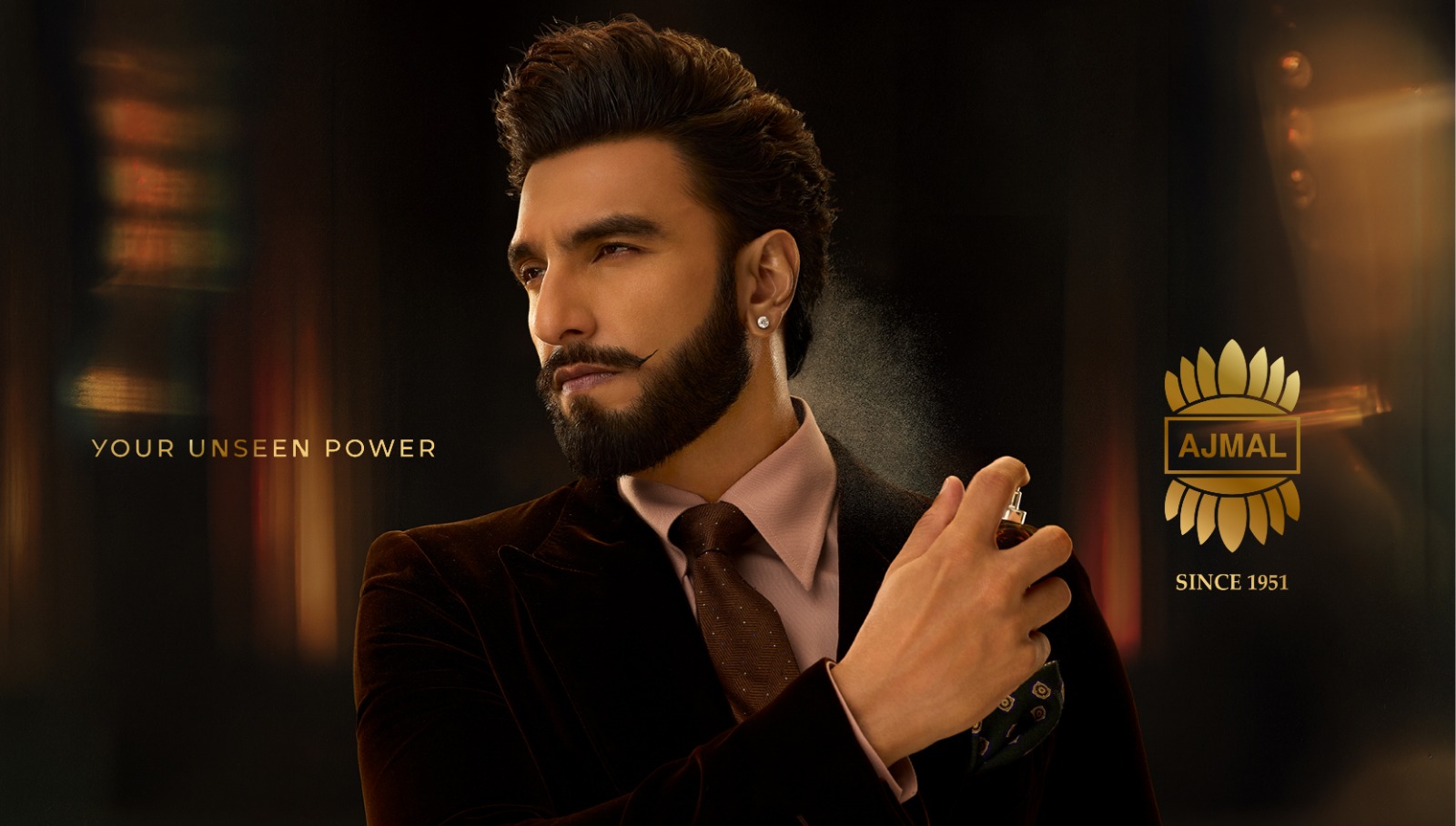
As Ajmal Perfumes sharpens its India play alongside its 75th anniversary, Communicate examines its campaign featuring Bollywood star Ranveer Singh. In an interaction with Communicate, Anup Kondakundi, Vice President, Marketing Strategy & Brand Transformation, Ajmal Dubai, explains the intent, creative choices, and cross-cultural positioning behind the campaign.
Ranveer Singh is a bold, high-decibel choice. What was the brief —were you looking to mirror that energy, or temper it to fit Ajmal’s more nuanced, heritage-led voice?
The easiest thing we could have done was to cast loud. Ranveer Singh has that reputation—electric, uncontainable, the kind of presence that fills a room before he’s even walked in. But that’s not actually why we chose him.
We chose him because of what happens after the room goes quiet. Ranveer has a stillness that most people miss. It sits underneath all that energy, and that’s exactly where fragrance lives, not in the entrance, but in what lingers after. Confidence that shouts is easy to cast. Confidence that stays with you? That’s rare. And that’s what this campaign needed.
Ajmal has a deep-rooted Arabian legacy. How did you reconcile that with Ranveer’s distinctly Indian, contemporary persona — or were you leaning on Bollywood’s universal appeal?
There’s a question we kept returning to in the brief: what does a 75-year-old Arabian perfume house and a Bollywood superstar actually have in common? More than people expect.
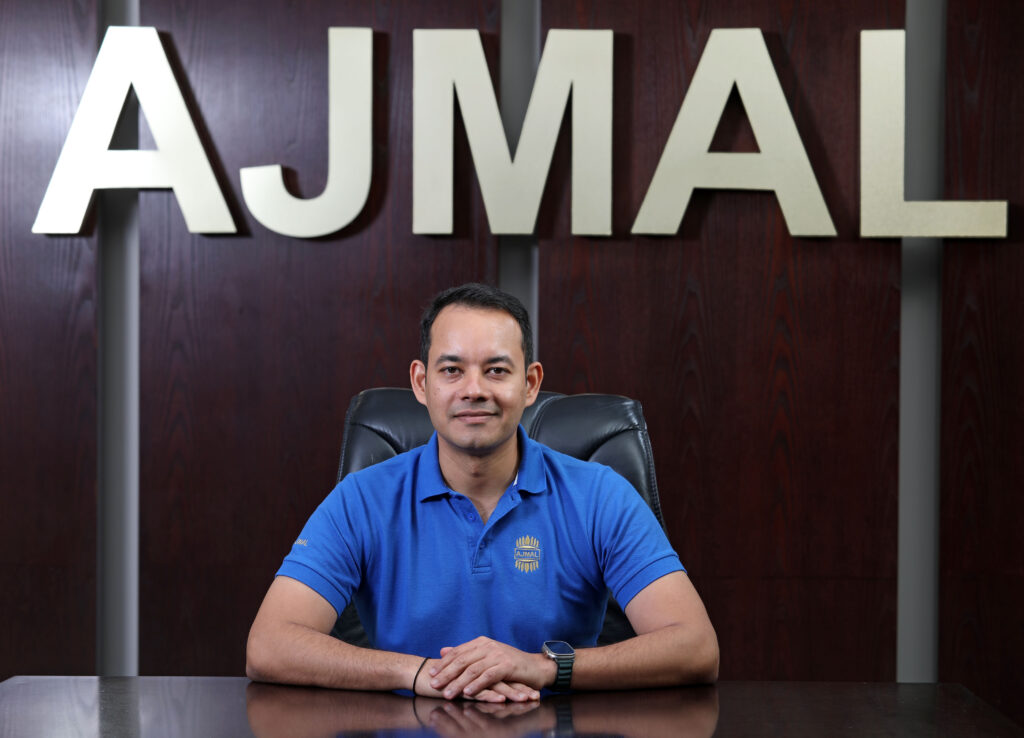
Ajmal Dubai was never just a regional story. It was always about the universal human need to be remembered—to walk into a room and leave something of yourself behind. Ranveer Singh lives that idea every single day. His identity is deeply Indian, but his cultural reach doesn’t stop at a border. Neither does scent. That’s the connection. Not geography. Not demographics. The shared belief that the most powerful version of you is the one people can’t quite explain.
The campaign leans on “self-expression through fragrance.” How did you bring that rather abstract idea to life?
Transforming the abstract idea of self-expression through fragrance became tangible by presenting three distinct scents, each carrying its own emotional tone: structure, warmth, and intimacy. Ranveer embodies each of these states differently, bringing the concept of self-expression to life in a compelling way. It stops being just a tagline when you witness someone seamlessly shifting between these emotional layers on screen—that’s where the idea truly works, and this can be picturized very well in the campaign film. The line “the unseen power” serves as a strong anchor, turning something invisible into something perceptible through behavior rather than words.
Three fragrances — Aristocrat, Aurum Summer, Wisal Layl. Why this trio, and were there nuanced edits for the UAE and India audiences?
For most fragrance campaigns, brands pick one hero product and build a world around it. We deliberately didn’t. Three distinct fragrances were chosen because together they cover the full arc of a person, not just a mood. Aristocrat speaks to aspiration and depth, Aurum Summer to energy and ease, Wisal Layl to something more private. That’s not one person on one day, that’s one person across a life.
On edits, yes, context matters. The UAE audience reads certain visual cues differently from an Indian audience, so the sequencing and emphasis shift. The fragrances are the same; the conversation around them is tailored.
Fragrance is notoriously hard to communicate visually. What were the key creative devices that helped translate scent into something cinematic?
Here’s the fundamental creative problem with fragrance: the product is invisible.
You can’t film a smell. You can’t demo it. You can’t hold it up to the camera and say, “Look at this.” Every instinct in commercial filmmaking pushes you toward the visual metaphor: slow-motion petals, liquid cascading in golden light, the usual. We rejected all of it.
We leaned on texture, proximity, and sound design instead. Scent is an intimate sense; the camera had to reflect that. Ranveer’s physicality did a lot of the work—his stillness in certain frames communicates more about a fragrance than any visual metaphor could. And “the unseen power” line wasn’t a closing thought; it was the creative brief.
Many brands are using AI to cut costs. Was AI involved at any stage — concepting, visualisation, production, or post?
This campaign is driven by a deep understanding of the market, consumer behavior, and emerging trends, with the goal of positioning Ajmal as a global brand, making human insight essential over AI. The Unseen Power campaign is designed to embody these elements while aligning with the brand’s objectives, therefore, AI was not used during the ideation and conceptualization stages.
While concepting and mood-boarding, AI is useful—a fast shorthand for building alignment before you put real resources on set. We used it. We’re clear-eyed about it.
But here’s what we’re also not—naive. This is a 75th anniversary campaign for a brand built on craft, on the human hand, on the kind of sensibility that takes decades to develop. Using AI to produce the final work would have been the most self-defeating creative decision we could make. The medium would have contradicted the message entirely. Ajmal Dubai’s equity is human. The campaign had to be too.
Ajmal has worked with Bollywood faces before. What lessons fed into this campaign?
Ajmal has always focused on brand and products to be on the front foot over celebrity endorsements. We’ve seen it before, in our own industry, and in other industries too, where brands sign the celebrity first and write the brief second. The brand bends itself to fit the star’s image rather than the other way around, and you end up with a famous face on a beautiful poster and absolutely nothing underneath it.
We took a different approach: the ambassador should amplify the brand’s story, not replace it. In this campaign, the fragrance trio was given the same level of importance as the celebrity. Although Ranveer was the protagonist, we had a clear vision of what we wanted to achieve—and that is distinctly reflected in the campaign film.
What benchmarks will define success six months from now?
We’re not chasing one number. We’re watching three, and if you understand why, you understand the strategy.
First, brand awareness in India. We want Ajmal Dubai to be a name people recognize and associate with quality, not just a heritage GCC brand they’ve vaguely heard of. Second, sales velocity on the three campaign fragrances across the UAE and India, and an increase in the market share, awareness that doesn’t convert is just ego. Third, how the rebrand to Ajmal Dubai lands with our existing loyal customers in the GCC. If we’ve grown without losing them, that’s the real win.
The goal of this campaign was to establish Ajmal as an aspirational, premium brand in India and the UAE, and drive consideration and purchase intent for Ajmal among the newer generation consumers, and build long-term equity through the association with Ranveer Singh.