By Hadi Khatib
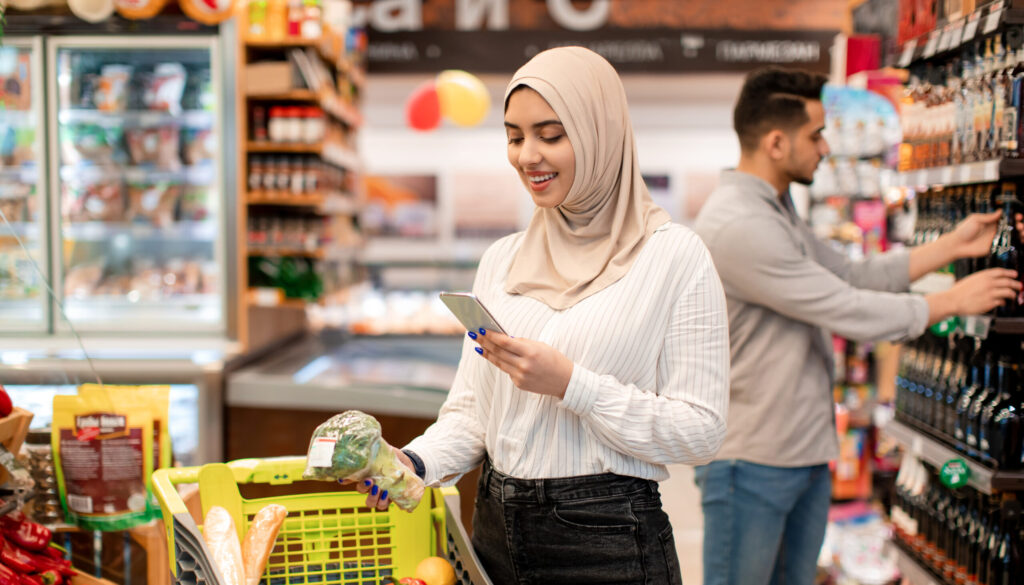
A 2025 report by Mckinsey said that GenAI and advanced personalization are no longer theoretical data projections, but rather mainstream revenue drivers. Retailers are using GenAI to scale customized experiences. Today, smart virtual shopping assistants are leading the shopping experience and using vernacular language to adapt to shoppers’ personalities and needs, sneakily building an instant consumer synopsis, using a preemptive, instant and cursory look at buyers’ social profiles, likes, and preferences.
“AI hasn’t just unlocked the ability to derive insight into customer behaviors and preferences at an unprecedented scale, but equally important, it’s enabling brands to do this at a never before possible speed,” Sue Azari, Industry Lead – eCommerce, AppsFlyer says. “Brands can now auto-generate creative variants, test them instantly and serve the version most likely to convert,” she tells Communicate.
When vendors get rewarded with a substantial uptick in engagement and sales conversion rates every time personalization is deployed, their attention immediately shifts to optimizing these processes in search for tailoring at scale and lowering marginal cost per personalized asset, versus incumbent manual creatives.
BCG’s late 2024 report titled: “Personalization in Action” says that retailers leveraging first-party data across personalization and retail media unlock up to $570 billion in potential value across retail ecosystems.
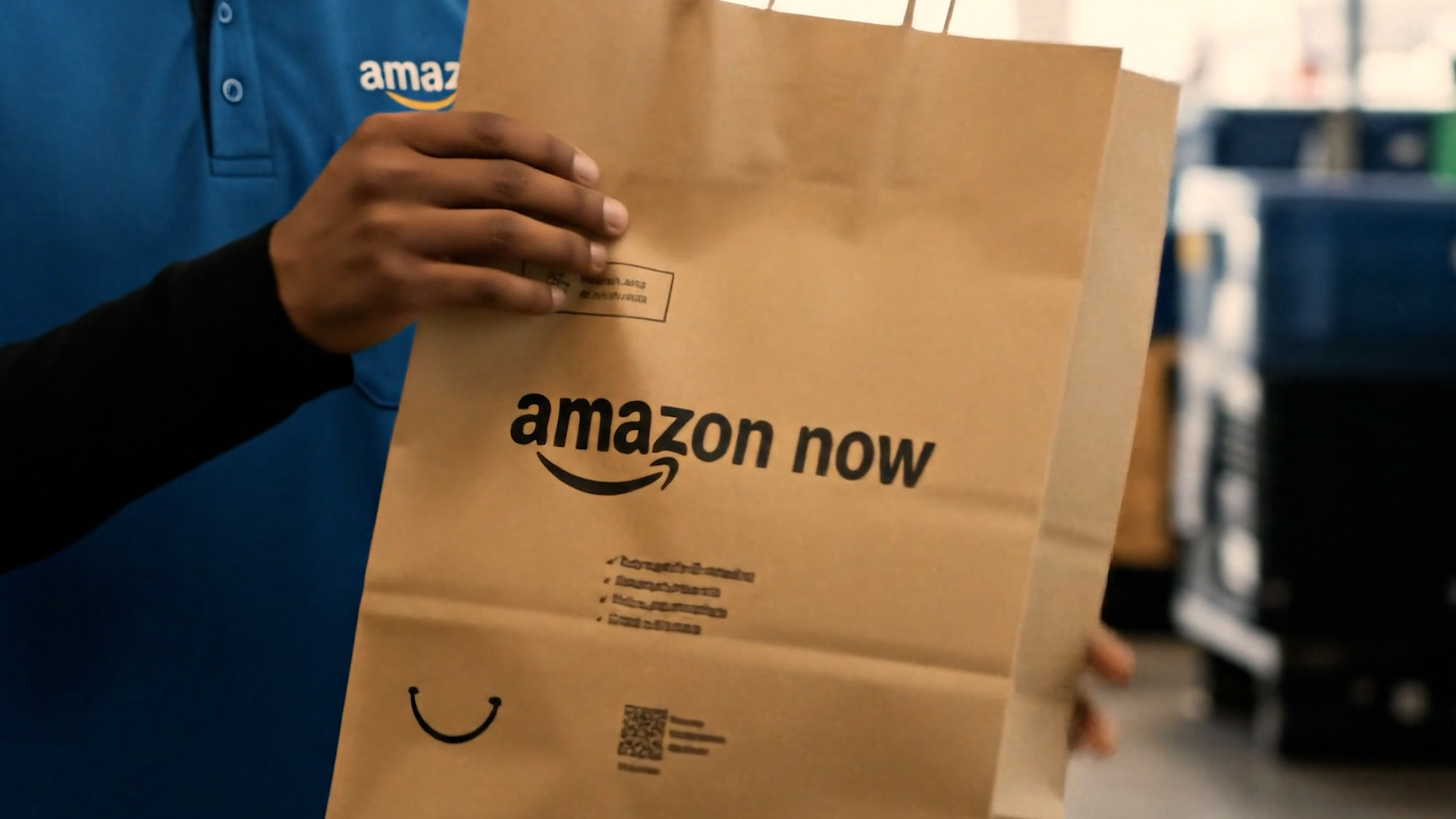
Amazon is now integrating algorithmic creatives into sponsored listings and product pages while regional merchants like Noon or Talabat are investing in AI-assisted pipelines such as ad product suites and checkout/persona signals to feed personalization engines, making personalizations measurable items in marketing ROI.
“AI is clearly the gravitational center right now, but it’s also serving as an accelerant for other sectors. In practice, the most compelling startups are those using AI to amplify domain-specific innovation (ranging from logistics and energy to media and finance) rather than those chasing AI for its own sake.” Chris Lawrence, founder and managing partner of Labyrinth Capital Partners tells Communicate.
Evgenii Pavlov, General Manager for Yango Ads in MEA shared with Communicate that recent studies, as reported by Khaleej Times, show that 70% of UAE consumers now use AI to shop, a
44% increase compared to 2024.
Significant others: Cross-platform partners
Retailers, ad-tech vendors and media owners are modeling integrated stacks, allowing brands and consumers alike to make purchases across in-store, app, and Connected TV (CTV), transitioning retail media from a transactional channel into an omni-channel marketing platform. Demand-Side Platforms (DSPs) and publishers integrate via APIs to deploy and manage the tracking tags for automation, data exchange, and server-side tracking.
“Retail media networks are extending their reach off-site, publishers leaning into shoppable formats that make content instantly actionable, and ad-tech platforms stepping in to unify measurement across apps, websites and even CTV, allowing customers to enjoy a journey that feels seamless, supported by one measurement framework that tracks real impact across every touchpoint,” Azari adds.
A late 2024 Amazon review by Reuters showed the retailer mogul locking in advertiser commitments on its streaming/video properties and using those partnerships to keep brands within its commerce and media ecosystems.
Regional platforms such as Noon are now launching ad product suites and exploring Digital-Out-of-Home (DOOH) on last-mile fleets via Flyby to extend advertiser reach beyond their app, where legacy publishers typically cannot deliver. This is turning delivery assets into attention moments, allowing advertisers to activate intent moments across discovery, delivery and in-home occasions.
Creative and measurable performances
Digital advertising is now led by data-first measurement. The IAB/PwC Internet Advertising Revenue full-year report shows digital ad revenue continuing its strong growth with internet ad revenues reaching $259 billion in 2024, a 15 percent YoY growth. PwC’s Entertainment & Media Outlook and supporting analyses (2024–25) show retail advertising and digital formats growing faster than traditional channels. AI-generated creatives allowing to measure actual purchases are impacting inventory management at scale.
For brands, that means moving from buying digital advertising based on a cost-per-thousand-impressions model, or CPM, to Return on Ad Spend (ROAS) buys where algorithmic creative is treated as an independent variable optimized against real sales. Advertisers are now shifting budgets to media that can connect impressions directly to ROI. Higher click-through rates are more noticeable when AI refines creative in real time, alongside meaningful improvements in add-to-cart and purchase behavior.
“In a recent study by Yango Ads, more than 48 percent of tourists from emerging markets said targeted ad campaigns influenced their destination choice. Within that cohort, over 67 percent opted for four- or five-star hotels. These results reinforce that creativity backed by data consistently delivers stronger engagement and measurable commercial impact,” Pavlov said.
In step with shifting consumer behaviors
Consumers’ buying trends are transforming as well. Rising AI adoption, increased app-first commerce and shifting content consumption are driving younger generations to opt for shorter formats and expect faster, more personalized buying experiences, Deloitte’s Digital Consumer Trends 2025, MENA sample reveals.
“People are gravitating towards authenticity and practical value, and they can instantly tell when something feels generic (or not). Expectations for relevance have risen dramatically while attention drops in seconds,” comments Azari.
Meanwhile, retailers are scrambling for differentiation, dealing with consumers whose attention spans are thinning by the minute. Food delivery company Talabat’s 2024–2025 investor/annual report stresses investing in surface ads and promotions that convert at delivery-adjacent or micro-moments, in a frictionless shopping journey that wins higher retention and conversion rates.
LuLu Retail said it is scaling digital investments and loyalty tooling in the GCC region to turn transactional and loyalty data into targeted ad offerings.
Luxury retail specialist in the GCC, Chalhoub Group, said in its intelligence team’s 2024 analysis of e-commerce growth in luxury, stressing that data-driven creative can increase conversion and brand relevance, especially when mixing first-party CRM and purchase histories with curated content and shoppable storytelling.
For its part, Alshaya Group, a leading international retail franchise operator, launched in late 2024 “Alshaya Media Connect” to monetize first-party data across its 70 franchise partners, effectively packaging franchise sales and CRM data into a media service for brand partners.
Is advertising becoming more personal, creative and relevant, and if so, is it shortening the path to purchases, using budgets more efficiently? AI is smack at the center of this dynamic landscape, cogitating and learning how to help brands and retailers break free from their silos and build stronger relationships, more in sync with consumers gravitating ever more towards authenticity.
The retail levers are being pressed from every direction, with a tireless AI buying its way in, keeping constant watch.