AI-driven optimisation, closed-loop measurement and platform ecosystems are reshaping budgets worldwide, sending global advertising beyond the $1 trillion threshold.
According to a forecast by Dentsu, global ad investment will grow 5.1 percent in 2026, outpacing the projected 3.1 percent rise in global GDP. Even amid geopolitical tensions, trade fragmentation and uneven economic recovery, the advertising industry is accelerating — propelled by automation, artificial intelligence and platform-driven media ecosystems.
Enter the Algorithmic Era
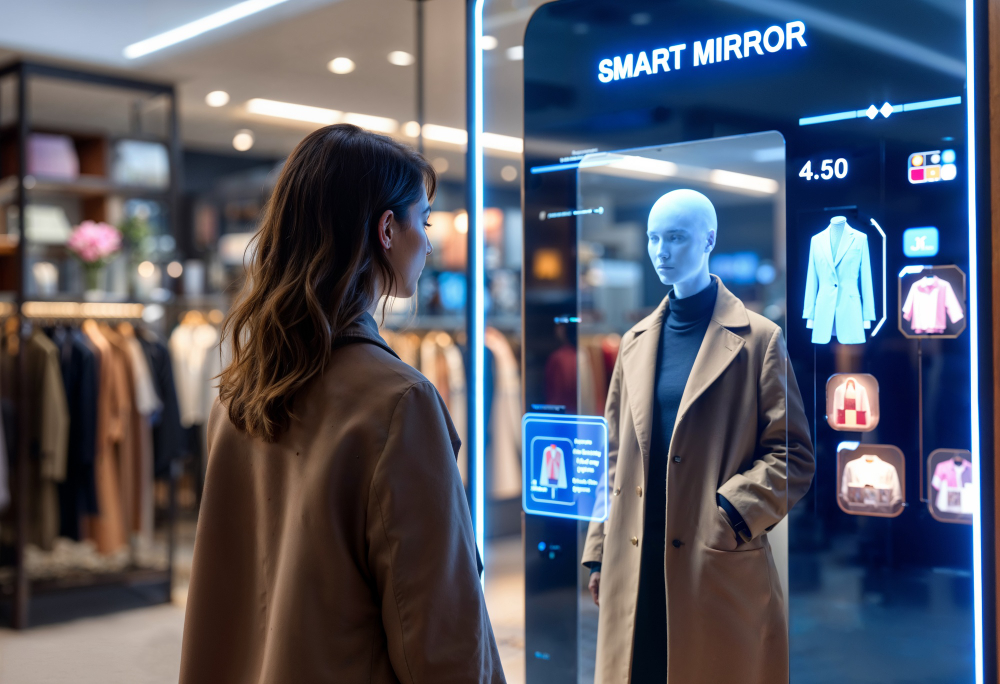
Dentsu characterises 2026 as a defining moment in what it calls the “Algorithmic Era” — a phase in which artificial intelligence does not merely assist media planning but actively determines it. From bid optimisation to creative versioning and audience segmentation, algorithmic systems are expected to drive 71.6 percent of total ad spend.
The shift is not incremental. It represents a rebalancing of power from manual planning and broad demographic targeting to automated, data-led decision systems that dynamically allocate budgets across platforms in real time.
CMOs are accelerating adoption of generative AI tools across media workflows, analytics and content production. However, Dentsu cautions that fragmented or unstructured AI deployment could create operational inefficiencies, underscoring the need for governance frameworks and human oversight.
Major events fuel investment cycles
Large-scale global events will inject cyclical momentum into ad spending in 2026, including the Olympic Winter Games already held, the FIFA World Cup and the United States midterm elections. Political advertising, sports sponsorships and event-led brand campaigns are expected to amplify media investment across television, digital and out-of-home formats.
Asia Pacific leads growth
Regionally, Asia Pacific will register the strongest growth at 5.4 percent. China’s mature digital infrastructure and lifestyle platform ecosystem are expected to deliver 6.1 percent growth, while India stands out at 8.6 percent — one of the fastest-growing major markets globally.
India’s surge is being driven by the rapid expansion of retail media networks, short-form video formats and mobile-first consumption habits. The interplay between e-commerce, influencer commerce and performance marketing is tightening the link between advertising exposure and measurable sales outcomes.
Americas: digital depth and political dollars
In the Americas, total ad spend is projected to reach $460.5 billion, growing 5.2 percent. The United States remains the anchor market, supported by high digital penetration, strong connected TV (CTV) adoption and election-driven advertising spikes.
Brazil is forecast to grow 9.1 percent, making it the fastest-growing major market globally. Election cycles and sports programming are reinforcing television, search and social media spending, illustrating how traditional and digital formats increasingly operate in tandem rather than in opposition.
EMEA: steady expansion with event boosts
Ad spending in EMEA is expected to rise 4.2 percent. The United Kingdom leads Europe at 5.7 percent growth, driven by broadcaster video-on-demand and digital expansion. Italy and France will also benefit from regional sporting events that stimulate media consumption and brand visibility.
Digital dominance deepens
Digital media will account for 68.7 percent of total global ad spend in 2026, growing 6.7 percent overall.
Retail media is the standout performer, projected to expand 14.1 percent. It is on track to overtake paid search by 2028 to become the second-largest digital channel globally. Its strength lies in closed-loop measurement and access to high-intent shopper data, aligning perfectly with algorithmic optimisation models.
Online video and social media will grow 11.5 percent and 11.4 percent respectively, driven by short-form content and influencer-led commerce. Nearly half of CMOs plan to increase influencer marketing investment, reflecting a shift toward creator-led distribution models embedded within platform ecosystems.
By contrast, paid search growth is moderating to 3.1 percent as generative AI reshapes how consumers discover information, accelerating the rise of Search Experience Optimisation (SXO) — where content is structured for AI-driven results, not just keyword rankings.
Television evolves, not disappears
Television remains culturally central but structurally transformed. Connected TV is forecast to grow 9.5 percent, fuelled by ad-supported streaming tiers and programmatic buying. Broadcast TV is expected to stabilise at flat growth in 2026 before resuming gradual decline thereafter.
Out-of-home advertising will rise 4.1 percent, with digital OOH growing 7.2 percent through contextual targeting and programmatic execution. Audio will post modest 0.7 percent overall growth, though digital audio expands 5.5 percent thanks to dynamic ad insertion. Cinema continues its post-pandemic recovery with 2.2 percent growth, while print declines 3 percent despite digital extensions.
Messaging and commerce converge
Another structural shift is the rise of business messaging ecosystems, particularly on platforms like WhatsApp. Brands are increasingly integrating paid media, conversational commerce and customer service into unified messaging journeys. From in-store QR activations to AI-driven product discovery within chat environments, messaging platforms are becoming full-funnel marketing channels.
Toward $1.15 trillion
Dentsu projects that global ad spending could approach $1.15 trillion by 2028. But the industry’s trajectory will depend less on macroeconomic tailwinds and more on how effectively companies navigate AI integration, platform dependency and governance challenges.
The $1 trillion milestone, therefore, is not just a financial landmark. It marks the consolidation of an advertising model defined by algorithms, automation and integrated commerce — where data flows determine visibility, and relevance is calculated in milliseconds.
The Algorithmic Era has moved from experimentation to infrastructure. In 2026, it becomes the operating system of global advertising.