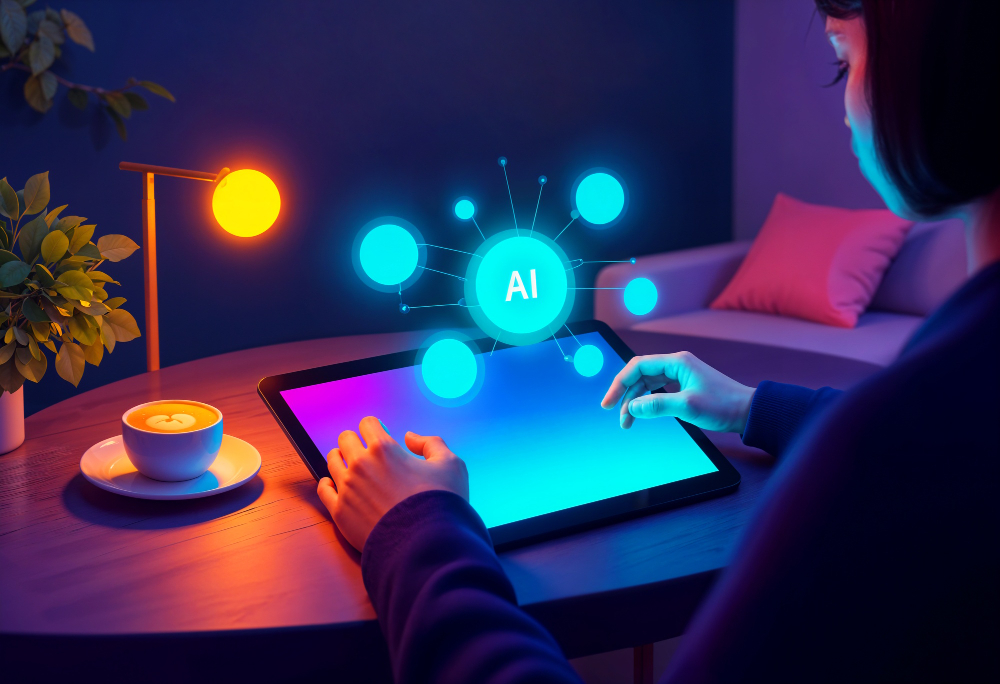
In the context of the ‘Creator Economy’, Creativity 3.0 is deeply impacted by Generative Artificial Intelligence (GenAI), large language models (LLMs), and highly personalized, data-driven experiences. It represents a fundamental shift from human-only creativity (1.0) and early digital tools (2.0) to a symbiotic human-AI co-creation. It is also potentially boosted by future integration of Web3 technologies like Blockchain and NFTs.
Scores of independent creators are already influencing billions of dollars in consumer spend, highlighting how creators are emerging as distribution and product innovators rather than simple ad channels.
“Diverse voices are disrupting the old corporate model by proving that influence is built through authenticity and community, not hierarchy.” Asha Sherwood, Founder & CEO, Abu Dhabi Review, told Commuincate.
This is forcing the hands of corporates and their precious brands to form ad-hoc partnerships, invite creators into product design, and adopt a decentralized decision-making campaign to preserve authenticity.
The 2025 Reuters Institute Digital News Report shows younger audiences are getting more of their information and recommendations from creators and social video than legacy corporate publishers, reducing reliance on large corporate editorials or distribution gatekeepers.
Founders and marketers must cede creative control to creators to keep campaigns credible. “ At Abu Dhabi Review, our growth has come from understanding what resonates locally and creating content that reflects the community, not corporate KPIs. This shift is pushing brands to collaborate more meaningfully with platforms where relevance, relatability, and shared value matter more than polished, top-down messaging,” Sherwood explained.
However, facing intense competition for brand leadership and ambassadorship, creators are, in turn, under pressure to produce top-of-the-line content. Enter GenAI.
The role of AI and analytics in Creativity 3.0
AI and advanced analytics are functioning as creative accelerants. McKinsey’s 2025 State of AI shows firms and creators increasingly use generative models, automation pipelines, and advanced AI systems. These tools autonomously plan, reason, and execute complex, multi-step tasks, all to produce iterations faster, optimize formats to platform algorithms, and personalize content at scale.
This serves a dual purpose. Creators lower production costs and experiment with more creative hypotheses; brands launch creative strategies and targeting that tie creator output to measurable outcomes.
Of course, analytics alone doesn’t replace human judgment, authenticity, and cultural contexts, human strengths that remain invaluable. Reuters reporting and the Reuters Institute’s 2025 analysis highlight a balance: outlets and marketers that combine AI-driven insights with creators’ real-life perspectives for best performance. Creativity 3.0 is today defined by hybrid workflows where humans define voice and value and AI amplifies reach, iteration speed, and measurement.
“AI should serve your voice—it should never be your voice. We use AI to create efficiency and insight, but the goal isn’t to replace the creativity that powers authentic storytelling, “Chris Harrington, CEO of CreatorIQ, a top influencer marketing platform, said.
Metamorphosing to stay unique and competitive
While GenAI is one way to gain a creative, algorithmic and distribution edge, BCG’s May 2025 creator research shows creators who move away from general social media platforms to build highly engaged, niche communities around specific interests or offerings. capture greater value. Creators are thus becoming small businesses, just as legacy brand marketers, with product roadmaps, not just content feeds.
Reuters and summit reporting in 2025 describe creators adopting governance and transparency practices to protect trust as AI and commercial pressure increase. Creators who retain editorial independence or co-create product lines with fans preserve distinctiveness; those who lean too hard into templated, AI-generated content risk commoditization.
According to Sherwood, AI and analytics help creators understand behavior, refine ideas, and scale stories that genuinely land with audiences. But they only work when paired with human insight. The future lies in blending smart data with authentic storytelling, where technology strengthens creativity rather than replacing it.”
Role of Blockchain and NFTs in the Creator Economy
The World Economic Forum (WEF) work in 2025 on blockchain and digital assets emphasizes regulatory clarity and infrastructure maturation as prerequisites for meaningful creator use-cases. When markets stabilize, blockchain can enable creators to tokenize ownership, royalties and community access, which structurally shifts monetization power toward creators.
At the 2025 WEF at Davos, experts argued tokenization works best when tied to real, exclusive content, governance rights, and revenue-sharing models. If creators and platforms can build community tokens that unlock revenue streams and verifiable revenue splits, then NFTs and blockchain could become durable tools in a diversified creator monetization ecosystem.
Legal ownership of content
Who owns the copyright for works generated by a human prompt, and how do we legally distinguish between creative inspiration and algorithmic derivatives? “The difference is whether AI is enhancing human expression or is the source of the expressive choices. Copyright does not extend to purely AI-generated material or where there is insufficient human control over the expressive elements,” Miriam Lord, Associate Register of Copyrights and Director of Public Information and Education, U.S. Copyright Office, told media.
The creator only owns the copyright to their own contribution. The output must qualify as an “original work of authorship” that stems from human creative choices, such as modifying, arranging, or selecting the AI-generated elements. A simple prompt alone is generally not considered sufficient creative control.
A 2025 European Parliament Study on Generative AI and Copyright reported: “Fully machine-generated outputs should remain unprotected; AI-assisted works require harmonised protection criteria. The proper response is not to make copyright law fit AI, but to ensure that AI development respects the core legal and policy principles of the region’s copyright, including authorship, originality, and fair remuneration.”