When a brand understands the rhythms of everyday life, it doesn’t need to explain its relevance. The experience speaks for itself. Meaning is not added; it is revealed.
By Rahul Sharma
Saudi Arabia’s automotive market has reached a stage of maturity where the product alone is no longer a source of meaningful differentiation. With widespread availability and increasingly similar feature sets, innovation has become a baseline expectation rather than a standout advantage. In this environment, brands are recognizing that growth will not be driven by louder communication, but by a deeper understanding of people, culture, and context.
For years, automotive communication in the Kingdom (much like in other markets) has been largely product-led. Performance, technology, and price have shaped most narratives, often amplified through moments of high visibility on the cultural calendar. These moments still matter, but they are no longer enough to build lasting relevance with an audience that is young, culturally aware, and increasingly selective.
What is emerging instead is a shift towards culture-led thinking. At the center of that shift sits storytelling. Not storytelling as advertising, but storytelling as experience; something that unfolds naturally within people’s lives rather than being delivered to them.
The test drive offers a clear way to see this change. Traditionally, it has been a practical step in the journey: controlled, functional, and detached from everyday context. It answers rational questions but rarely leaves an emotional impression.
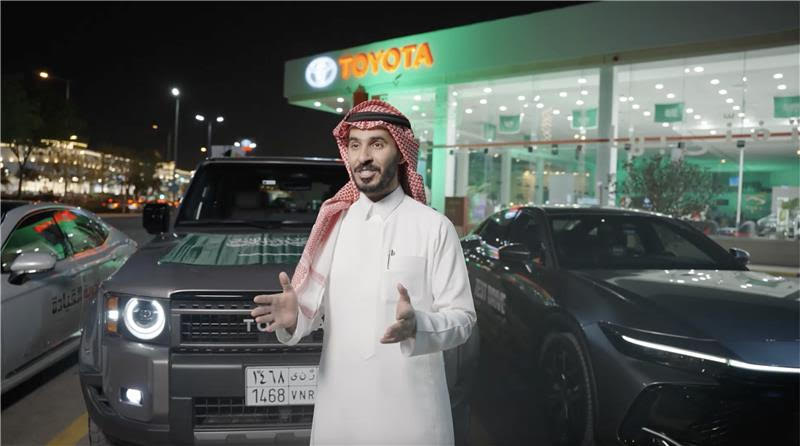
The Test Drive Parade reimagined the test-drive moment by transforming a long-established sales mechanic into a cultural experience embedded within everyday life. Instead of removing drivers from their surroundings, the experience was placed inside an existing public tradition, allowing people to encounter the vehicle while participating in something already familiar and meaningful.
By meeting people where they already are, rather than asking them to step outside their routines, the drive felt organic rather than orchestrated, not transactional but lived. In that shift, conventional automotive engagement was disrupted, the product stepped out of the spotlight, and the story emerged naturally through participation.
This is where culture-led storytelling shows its strength. When a brand understands the rhythms of everyday life, it doesn’t need to explain its relevance. The experience speaks for itself. Meaning is not added; it is revealed.
Description automatically generated
This way of thinking extends beyond physical experiences. Cultural fluency increasingly shapes how brands appear across all touchpoints: in retail spaces that feel intuitive rather than imported, in social content that reflects real behavior rather than polished narratives, and in creator collaborations that feel more like translation than amplification. Over time, these moments reinforce a shared understanding of place, tone, and context. As a result, calendar-led visibility is slowly giving way to something more continuous. Relevance is built through repeated moments of familiarity, not isolated peaks of attention. For Saudi audiences, presence in everyday life matters just as much as presence in moments of celebration. Technology can support this shift, but it cannot lead it. Data and platforms help identify patterns, personalize interactions, and scale storytelling across channels. But cultural relevance still depends on human interpretation.
In the Saudi context, authenticity stems from knowing when to speak, when to listen, and when to be present.
The Test Drive Parade worked because it respected that balance: culture was not treated as a backdrop or an aesthetic to borrow from. It was treated as the foundation of the experience. Commerce followed naturally, without interrupting the moment itself.
As Saudi Arabia continues to evolve culturally and socially, automotive brands are being asked to rethink their role. Product will always matter. But it is storytelling, grounded in cultural understanding, that allows products to move beyond features and into people’s lives.
In a market shaped by pride, progress, and identity, the brands that will lead are those that recognize culture not as a moment to show up for, but as a space to belong to.
(The author is the Associate Creative Director, Serviceplan Experience)