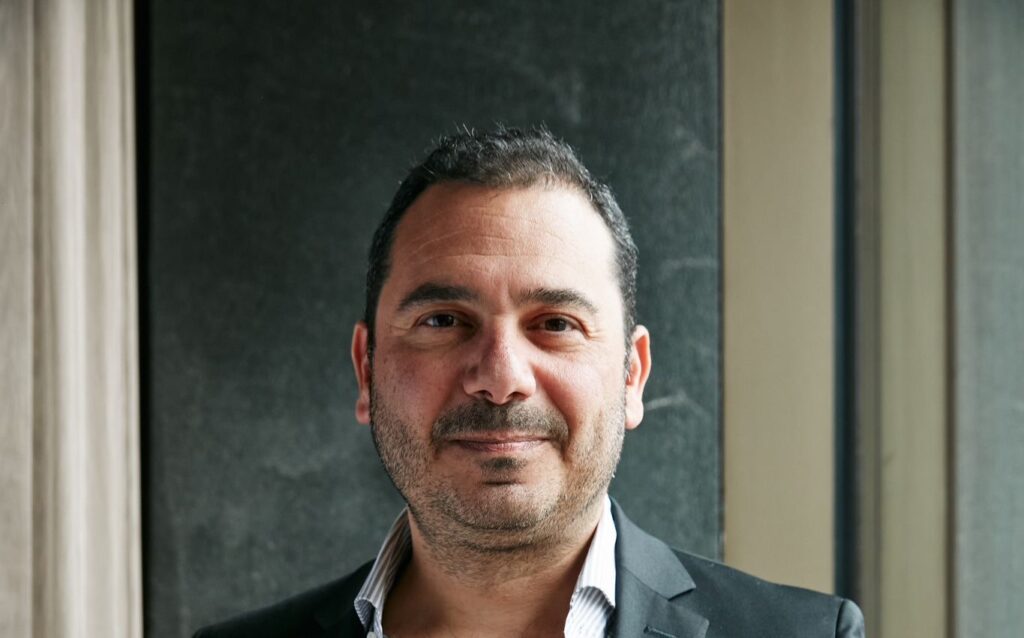
AI is transforming marketing in the MENA region, but it’s not a strategy in itself. Tony Wazen, CEO of Publicis Media, explains how brands can harness AI, connected commerce, and human insight to create fully connected ecosystems that drive smarter decisions, stronger storytelling, and measurable growth.
With connected commerce growing rapidly, how are AI-powered strategies contributing to brands’ transformations?
In MENA, connected commerce is not just about technological adoption; it’s about redefining how brands create value across the entire consumer journey.
AI-powered strategies are helping brands move from fragmented touchpoints to fully connected ecosystems, where media, data, creativity, and commerce work together. What we’re seeing increasingly is AI enabling smarter decision-making upstream, from predicting demand to shaping personalized experiences to optimizing investment in real time. However, it’s important to be clear: AI is not the strategy in itself.
The real transformation happens when AI is used to remove inefficiencies and minimize waste, allowing brands to reinvest in stronger ideas, better storytelling, and culturally relevant experiences.
In this region especially, success comes from balancing advanced automation with a deep understanding of local behaviors, languages, and identities. AI helps us scale that understanding, but it’s human insight that gives it meaning.
How do AI and data-driven insights enhance media performance across campaigns, and what are some examples of this in practice in the region?
AI has fundamentally changed how media performance is planned, activated, and optimized.
At a practical level, AI enables us to predict outcomes before budgets are committed, optimize campaigns dynamically rather than retrospectively, and align media exposure more closely with real business results.
In the Middle East, we are seeing strong results where AI is applied across retail media, performance channels, and premium content environments.
For example, in retail and FMCG, AI-driven audience modeling allows brands to activate against actual shopper intent, not just proxy demographics. In automotive and telecoms, predictive optimization models help shift spend in real time based on performance signals, improving efficiency without compromising scale.
What’s most powerful is when data and creativity work together. AI can identify which creative elements resonate most strongly with different audiences, but it’s the creative idea, rooted in local culture, that ultimately drives impact through personalization at scale.
What are the unique challenges and opportunities for brands when it comes to leveraging AI, connected media, and performance marketing?
The Middle East presents a very compelling opportunity for AI-driven marketing, but it also requires a thoughtful approach. From an opportunity perspective, our region benefits from high digital and mobile penetration, rapid growth in retail media and commerce platforms, and a strong government-led focus on AI and digital transformation. All this creates an environment where brands can adopt connected media models faster than in many mature markets.
However, we also have challenges: fragmented data ecosystems across platforms and partners, a need for talent that can bridge data, technology, and creativity, and a risk of over-automating at the expense of brand meaning.
One of the key challenges is ensuring AI enhances brand value, not just short-term performance. Automation without strategy leads to efficiency, but not growth.
The brands that succeed are those that use AI responsibly, combining technology with human judgment, cultural understanding, and long-term brand ambition.
How do you see AI reshaping the marketing and advertising landscape over the next two to three years?
Over the next few years, AI will become embedded, not exceptional. We’ll see several clear shifts: marketing will become increasingly predictive rather than reactive, and brands will plan with a clearer understanding of future demand, not just past performance.
Moreover, AI will act as a creative accelerator. It will help scale content, localization, and personalization, but it won’t replace original thinking. The role of creativity will become more important, not less.
Commerce and media will continue to converge, and retail media, data partnerships, and closed-loop measurement will push marketing closer to real commercial outcomes.
Finally, responsible AI will move to the forefront. In markets like the UAE and Saudi Arabia, transparency, governance, and ethical use of data will be critical to maintaining trust.
Ultimately, AI will not replace marketers, but it will raise expectations. Those who combine technology with insight, creativity, and cultural relevance will define the next chapter of marketing in the region.
(The interview was originally published in the latest print issue of Communicate. Here is the link)