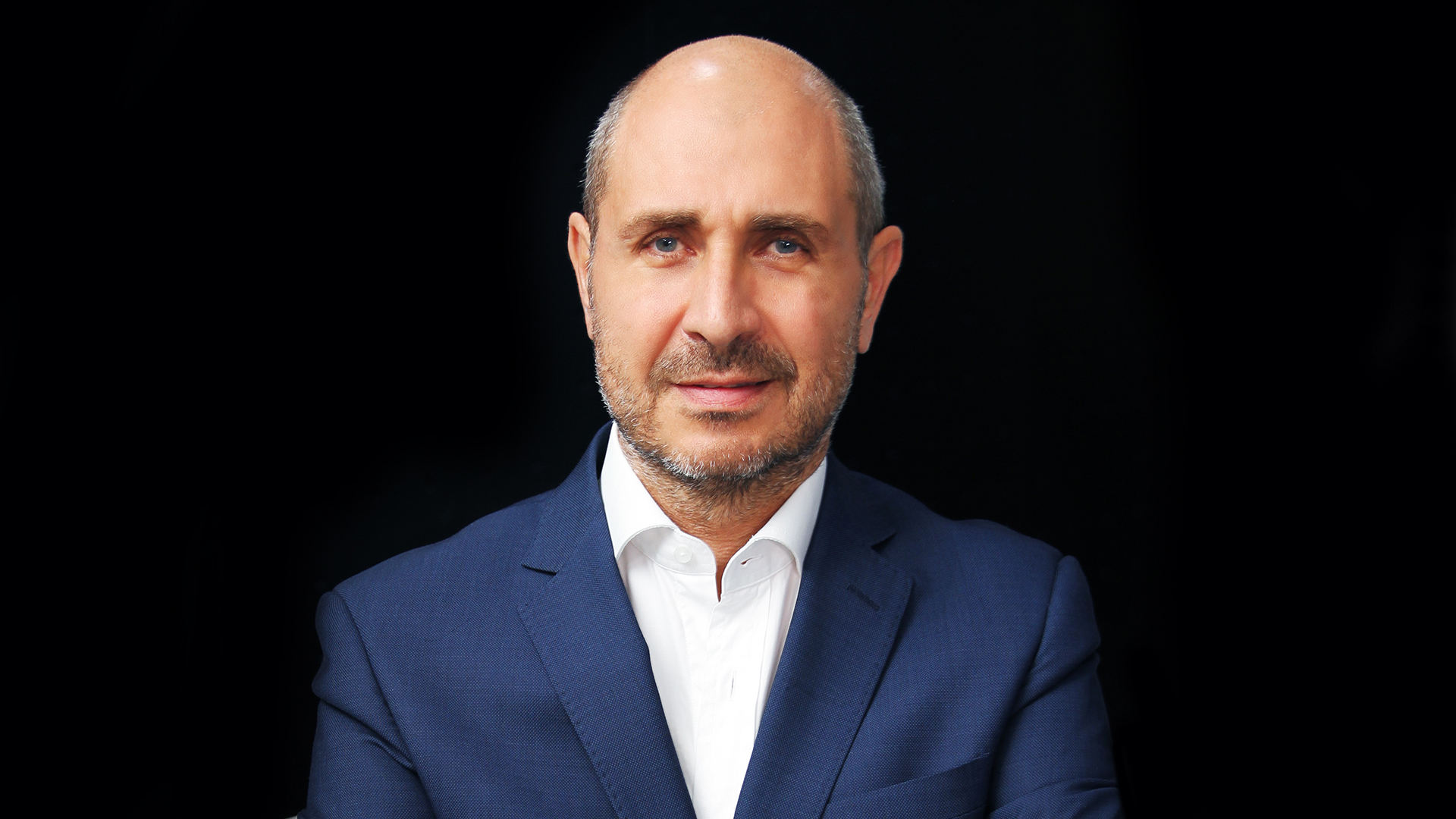
With audiences distracted, trust on the line, and AI reshaping everything, communications are transforming before our eyes. In this discussion, Ziad Hasbani, Regional CEO, at Weber Shandwick, Current Global and Jack Morton (Middle East, North Africa, and Turkey), reveals how speed, creativity, precision, and judgment are now what separate the signal from the noise and what will define success in 2026.
What are your predictions for the industry in 2026 and how are attention fragmentation, trust erosion, AI becoming the baseline going to change this landscape?
This is a tricky question because much of what we took for granted in communications will no longer hold.
The first is the idea that we still control attention. We don’t. Attention is scattered, which means that capturing and engaging audiences will be more challenging than ever.
Hyper-personalization, multiplatform storytelling, and the power of transparency, authenticity, and relevance are what will drive engagement.
Trust is losing ground to skepticism in corporates and institutions, while misinformation and disinformation are spreading. But actions, especially the contribution of relevant value to specific stakeholders, will help build confidence and credibility.
AI in general is not considered a competitive advantage; it’s part of a toolkit, essential to be competitive. So, efficiency, speed, scale, ethics, measurable impact, purpose-led strategies, and sound judgement are what will define communications.
Share a snapshot of the media, PR & communications landscape in 2030.
I don’t have a crystal ball, but observing the current trends, I believe we will be navigating an increase in immediacy, hyper-personalization, and complexity, with the lines between media, technology, and culture continuing to blur and merge.
Media will become more personal, more contextual, and less centralized.
We’ll be operating fully in an economy of attention. Everything is shorter. And everything competes with everything. In the short term, well-judged tactics will matter just as much as long-term strategies. Ideas will need to work in seconds, not slides.
Writing alone won’t be enough. If you can’t think visually, you’ll struggle to grab attention, be heard, and be convincing. Only truly outstanding work will earn its way through.
Paid, earned, shared, and owned media will completely converge.
In this economy of attention, agencies should be focusing on speed with judgment, and human creativity will be vital to keep it culturally resonant.
From your vantage point, what are we overlooking when we discuss the future of media, marketing, and communications?
I’d like to reframe the question and, instead of “what we’re overlooking,” focus instead on “what’s opening up?”
Undoubtedly, the media market will continue to grow, and from where I sit, and working with leaders across markets and sectors, there are still a lot of opportunities in this industry.
Yes, the landscape is tougher; yes, attention is fragmented, but that pressure is raising the standards, and that’s an opportunity. It’s forcing better thinking, clearer choices, and stronger and more creative and precise work.
You can already see a shift, especially given the sizable youth segment in the Middle East, where over 60% of the population is under the age of 30. Those now rely primarily on social and video platforms for news and for information consumption, and it’s not a small shift: a whole generation is growing up with completely different settings, so more opportunities are opening.
There’s also growing value in restraint. In a world where everyone can publish instantly, the organizations that stand out are often the ones that don’t speak constantly. They choose their moments. They show up when they have something meaningful to add. That discipline is becoming a real advantage.
For leaders, the implication is simple. It’s no longer enough to be present. You must be useful. You must earn your place in the conversation. That raises the bar, but it also makes this an interesting time to be in the business.
PR, marketing, media, creators, corporate affairs are all blurring. What does a “great communications leader” actually look like in 2026? And what skills do you think we’ve been overvaluing or lacking?
A great communications leader today is a creative and strategic advisor who simplifies complexities and understands actual needs. It’s a data-driven thinker who can analyze the challenge at hand from the perspectives of culture, stakeholders, and market forces—and who can integrate all marcomms disciplines to provide a solution that addresses the challenge, delivers on the business goals, and prioritizes reputation goals.
I think it is more about judgement and less about the amount of output or being a channel or discipline expert.
In a world run by algorithms, scrolling culture, and short attention spans, where do you think real influence actually comes from today?
First, let’s establish that visibility doesn’t create or equal influence. Real influence comes from credibility earned through consistency and living up to shared values. It’s about whether people believe you and are ready to share your message with others.
Algorithms can shape the reach of your message, but not the belief of your target audience.
So true influence is built on trust, and trust is built on clear thinking, authenticity, resonance, and most importantly, on alignment between actions and words.
The Middle East has skipped a lot of legacy thinking across media, government communications, even in brand-building. What do you think the Middle East gets right that global markets struggle with?
In my opinion, the Middle East region got many things right, not only in media and communications. Its greatest advantage is that the region didn’t constrain itself in its legacy or traditional past mindset; it focused on building forward-looking models.
What also helped is that their communications and storytelling were anchored in clear national visions, global ambitions, supported by speed of decisions, speed of actions and deployment of resources. Having a young and highly connected and digitally engaged population helps, especially since people here think digital first and adopt fast.
The region’s communications and storytelling strategies are bold, purpose-driven and blend economic diversity, modernity, and cultural heritage.
Clients are far more commercially minded now than they were five years ago. How do you explain the value of communications today, and what are clients really asking for behind closed doors?
I agree that clients today are more commercially driven; they want growth, they want market share, shareholder value, and that is normal especially in the private sector. But let’s also agree that communications is not a cost, it’s an investment in reputation, and a competitive advantage.
Clients want to strengthen their business today and build their brands for the future, and that can only happen by developing communications strategies that increase awareness, grow loyalty, drive consumer behavior, build reputation, and mitigate risks.
Behind closed doors, they want strategies to solve a problem and deliver measurable results such as sales or more employee engagement; they also want efficiency and cost-effectiveness. Ultimately, they want alignment with their business goals.
If you were sitting with a CEO right now, what’s the one thing you’d urge them to rethink, unlearn, and relearn about how their organization communicates and builds trust?
If sitting with a CEO, I would first urge them to rethink the concept of trust. To unlearn and relearn that belief in a brand isn’t built overnight through what you say but built and earned over time through what you do and how consistently you align your actions with your words.
But I’d also ask a CEO to rethink communications and genuinely understand it as a two-way or even multi-way value exchange. It’s not just sending a message; it’s also listening and engaging in dialogue.
I would ask them to unlearn the idea that control creates credibility and relearn that authenticity, transparency, and ethics are what earn trust today.
Do you see an erosion of trust in the industry? How is your organization addressing it?
First – trust is hard to earn and easier to lose than ever before. And to be frank, misinformation and disinformation are adding to this challenge, with the result being an increase in skepticism towards the corporate world.
At Weber Shandwick we look at this issue as a challenge but also an opportunity to reinforce transparency, integrity, accountability, and contribution of value. We’re committed to ethical storytelling and narrative development, including rigorous fact-checking and aligning actions with words, and so on.
We also use AI tools to monitor and address misinformation and work on developing ethics frameworks aligned to regional and global cultural sensitivities. We do everything we can to help combat misinformation and disinformation.
Our Strategic Priorities for 2026
Our key objective for 2026 is to expand our leadership position in the market—earning, contributing and building value – while being the region’s most trusted and indispensable partner to clients.
To achieve this, we focus on many areas, such as enhancing our capabilities, technology, and AI to deliver faster, smarter, tangible solutions for our clients.
We also focus on fostering innovation and forward-thinking and by empowering our teams with training, upskilling and access to tools.
From a business perspective, we prioritize growth markets and sectors, and we build our offering around them and ensure we remain indispensable to clients.
In a time of uncertainty and transformation, our clients need more than a communications partner; they need a trusted advisor, and this is what we focus on.