Advertising has never been this harder, yet smarter. For CMOs in the region, tighter budgets and ever-shifting audience behaviour are making every decision critical. The challenge is no longer simply reaching people, but reaching the right people, proving that campaigns actually work, and making every marketing dirham count.
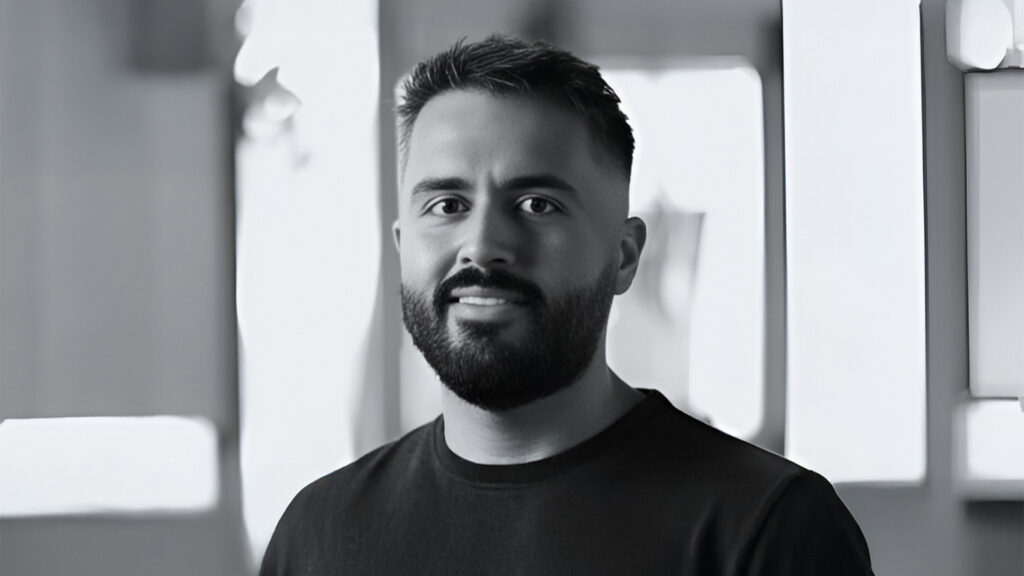
In this landscape, Ihab El Yaman, Founder and CEO of MEmob+ (a UAE-based data intelligence company) is helping brands connect real-world behaviour with digital campaigns. His martech company’s data-driven approach gives marketers the insight and precision they need to make sense of a fragmented media turf. In conversation with Communicate, Ihab explains how brands can avoid wasted spend, prove impact and navigate the industry’s tectonic shifts, embracing AI and turning hyper-precision and data into storytelling for impact, all the while constructing the next era of effective advertising.
How does the market feel right now? Is it cautious, optimistic, or tech-driven?
The market is always optimistic, but it moves in waves, just like economies do. These fluctuations are not driven purely by budgets, but by how technology evolves. When platforms introduce major changes, the market reacts. For example, META’s recent launch of Audience+ updates around signal-based targeting and limiting the number of datasets advertisers can upload changed how brands and agencies operate. That was both good and bad news for the market.
This is when clients start looking for services MEmob+ provides – pure technology that gives them a data set that Facebook can learn from.
We see clients and agencies adapting only when they are forced to. Once a platform announces a shift, everyone starts testing and looking for technologies that can support that transition. From our side, demand depends on how fast the market needs to adapt to new technological realities. It’s never static, it constantly moves with innovation.
How do you see the advertising spend split today between platforms like Google, Meta, and the rest?
Google will always remain strong because of search. Search engine marketing is critical, especially with Google limiting visibility to a small number of results. If you’re not there, you simply disappear. This is especially challenging for SMEs.
That said, the winning platform in advertising spend ultimately follows where people spend their time. This is why social platforms continue to grow. Meta, TikTok, and Snapchat are all competing for attention by improving user experience and engagement. The split differs by market. In Saudi Arabia, Snapchat is booming and expanding. In comparison, Snapchat UAE is doing so-so. In Egypt, TikTok is flying and Snapchat is so-so. So, ad spend in the region move according to platform penetration and audience behavior. It shows you where the dollar will be split. Yes, the majority of audiences today are on Meta, with some presence on Snapchat, and a smaller footprint on TikTok in the MENA market, for example, in the UAE.
AI is transforming the industry. How does that align with MEmob’s evolution?
AI is empowering our technology. Generative AI needs data to learn from, and that’s where we play a key role. When companies, CMOs, and even agencies want to build a mapping system for Dubai using AI, they need a strong partner to collect data, apply filters, and normalize it, because raw data is often messy and unorganized. They then take this structured data, feed it into the AI, which learns from it and starts delivering insights. Our role is a key one, we provide the data foundation that any AI system needs to produce accurate outputs.
We’re moving toward AI-driven briefing. Instead of manually building audiences, a brand can simply describe who they want to target, where, and with what offer. The AI then identifies points of interest, analyses traffic patterns, defines the audience, recommends budgets, and allocates channels. That’s your customer and that’s your budget. That is how you split it, because we can tell if our audience is on Facebook, Instagram, Snapchat, TikTok or Google.
We’re also building agents that allow brands and agencies to query MEmob+ data directly through AI interfaces, producing answers in seconds based on proprietary data, not the open internet.
What are brands asking for today that they weren’t asking for two or three years ago?
They are asking for more precise audiences and technologies that will help connect the dots between platforms. Brands are no longer satisfied with mass reach metrics. When they invest across multiple platforms, they want to understand unique reach and avoid duplication.
Clients are very budget-cautious today. Efficiency matters more than ever. Clients want performance, not awareness. They want to know that every dollar is reaching a real, relevant audience and contributing to measurable outcomes.
Ad fraud remains a major concern. How do you help brands protect their spend?
We rely heavily on location intelligence to identify fraudulent behavior. Mobile devices are expected to move. When we detect thousands of devices sitting in one location dormant for extended periods, we know they are likely part of mobile farms or bot networks.
We cross-check device IDs, IP addresses, VPNs connected around the world, and historical movement patterns. We clean this data before activation and report on fraudulent activity transparently. From a media buying perspective, we can apply these checks and battle ad fraud with our own tools (like DPS) not only through data. This significantly reduces wasted spend and improves performance integrity.
Which industries see the strongest impact from your solutions?
Retail is our strongest vertical. This includes FMCG, QSR, automotive, Food and beverage and any business with physical locations. We help brands identify real shoppers and frequent visitors rather than targeting everyone.
For FMCG, this has been transformative. Instead of targeting the mass market, we focus on frequent shoppers and decision-makers. By analyzing footfall, visit frequency, and store-level behavior, brands can activate far more relevant audiences.
We also work with large forums helping them identify attendees, understand movement patterns, and re-engage audiences.
Many GCC brands are still navigating their martech journey. What do they often get wrong?
The biggest issue is over-claiming. Many companies promise capabilities that are not technically or legally possible at scale. This creates confusion and damages trust across the market.
Companies that exaggerate their capabilities may succeed briefly, but they eventually disappear once their claims are tested. We’ve seen many vendors enter the market, overpromise, and exit within a couple of years. Long-term success in martech depends on transparency, accuracy, and collaboration.
Where do you see marketing budgets shifting today?
We see a split between digital outdoor, CTV and TV. We’re seeing strong growth in CTV and digital out-of-home. Outdoor still has a big role.
Linear TV continues to decline, while digital channels absorb more spend. Digital still plays a big role. I would say digital with a CTV now and digital out-of-home is taking a big chunk from TV and outdoor.
How do you compare the European martech market with the GCC?
The UAE, particularly Dubai, remains the regional hub for digital marketing, advertising and martech. Saudi Arabia is accelerating quickly, but much of the expertise still comes from the UAE.
Europe is more fragmented and quote big. Every country operates marketing and digital advertising in a different way. Markets that are more open to international talent and diverse expertise tend to innovate and accelerating 10 times faster.
The martech scene in Germany is changing and is evolving, rapidly becoming more international.
Finally, how important is storytelling in a data-driven world?
Storytelling is the main thing. Data alone doesn’t sell. You might have the best product in the world. If you don’t have the story, the right story that will fit with the right KPI and objective for the client, you’ll never be able to sell. You need a narrative that connects insights to human behavior and business objectives. Even the best technology fails without a story that resonates with the client’s goals.
At MEmob+, every dataset tells a story about how people move, live, shop, and interact with the world. When data and storytelling align, that’s when real impact happens.