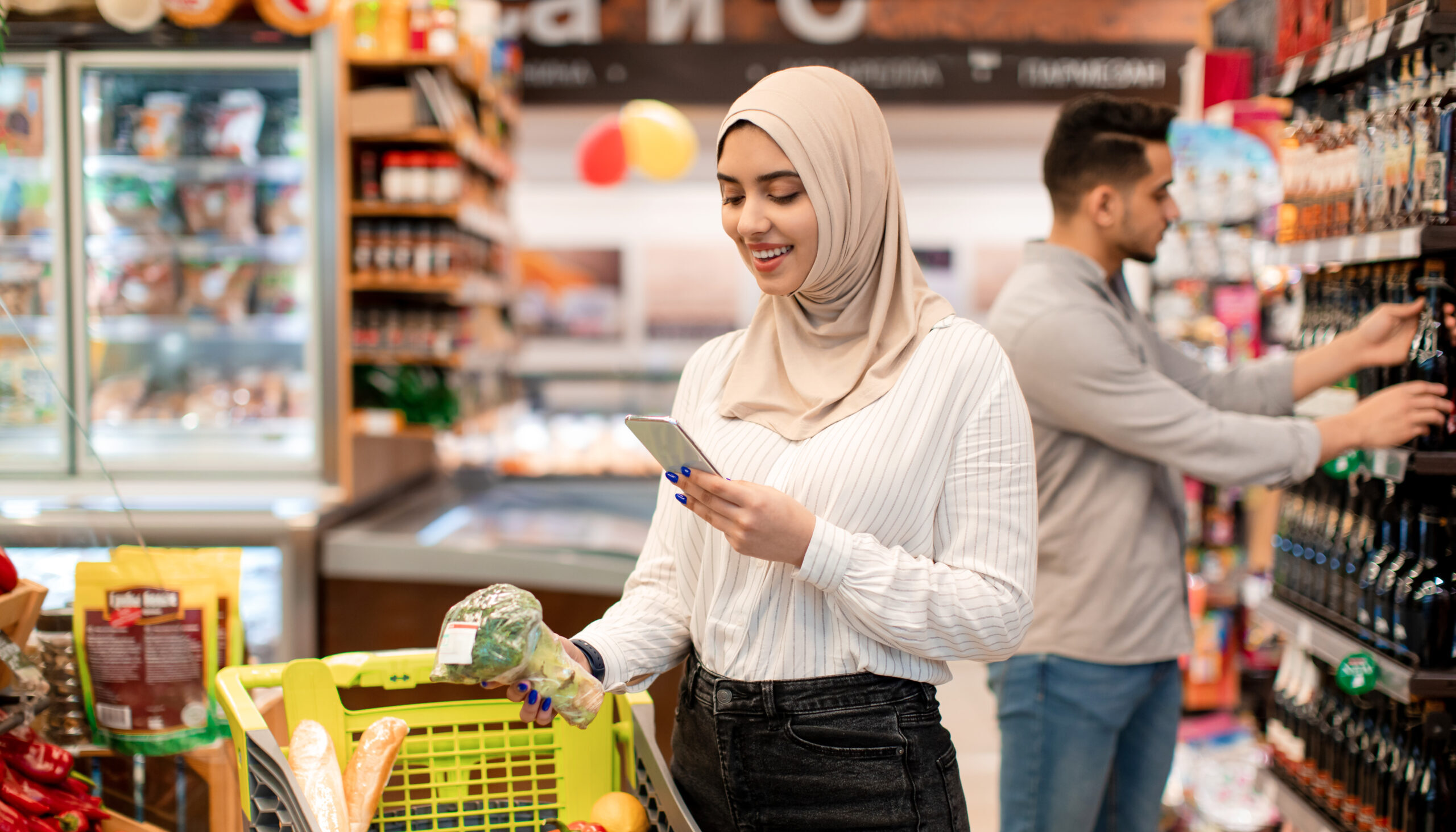
In 2026, FMCG leaders have moved beyond adjusting pricing based on supply and demand factors, and into individualized pricing. Toward this goal, Agentic AIs are tasked with autonomously analyzing both an individual’s digital footprint and purchase urgency in real time.
By: Hadi Khatib
As of February 2026, the transition from broad price hikes to individualized, algorithmic valuation has redefined the relationship between brand and buyer for the FMCG and Consumer Packaged Goods (CPG) sectors.
“Most brands are using behind-the-scenes AI to optimize promotions, regional pricing, and demand forecasting rather than visibly personalizing prices for each consumer. The focus is on balancing data intelligence with fairness so that pricing feels relevant but never discriminatory,” Sonal Chiber, a global strategy consultant, said.
This shift prompts an exploration into the mechanics, ethics, and nuances behind these price strategies.
Pricing ‘buying urgency’
In 2026, FMCG leaders have moved beyond adjusting pricing based on supply and demand factors, and into individualized pricing. Toward this goal, Agentic AIs are tasked with autonomously analyzing both an individual’s digital footprint and purchase urgency in real time.
According to Deloitte’s 2026 Global Outlook, 23 percent of CPG companies have now integrated AI to combine Retail Media Networks (RMNs) and personal devices data, allowing algorithms to detect ‘urgency of buying’ signals such as low battery life (correlated with rushed decisions), frequent app refreshes, or geo-location proximity to a store where a competitor’s stock might be low.
Seeing value in this, and instead of investing in further training AI models, FMCG strategies are prioritizing short-term profit by deploying AI agents in sales and pricing situations, which Deloitte notes will account for two-thirds of AI computation in 2026.
The fair value seeker
Deloitte’s Consumer Products Industry Outlook report in 2026 identified that 47 percent of global consumers are now ‘value seekers’, or shoppers who make deal-driven purchases because they no longer feel they receive fair prices.
This includes 35 percent of high-income households, an indication that the hunt for value has moved past low-income earners and up the economic ladder.
Their loyalty is to the “deal” rather than the brand, driven by the feeling that prices are no longer fair.
Habit, salience and easy buying paths matter more than AI price activation levers, according to Darius LaBelle, Managing Director, Middle East at November Five, an independent digital product agency. “Unless discounts are tied to superior experience, product and service, they become an expensive, low-loyalty addiction.”
Capgemini’s 2026 Consumer Trends report reveals that 74 percent of consumers would switch brands if they perceived pricing policies to be inconsistent or unfair.
It said 71 percent of consumers would switch brands if they discovered pack sizes or product quality were reduced (shrinkflation).
Knowing that today’s consumers also operate AI shopping tools to track price history, it makes discriminatory pricing, charging different people different prices based on their data, highly visible, leading to reputational risks and equity erosion for brands seeking consumers’ maximum willingness to pay, once detected.
“Even when algorithmic pricing is technically justified, it can feel unfair if customers believe someone else is paying less for the same product. This perception gap is critical. Brands that push margin optimization too aggressively risk damaging credibility and long-term loyalty,” Chiber explained.
Fairness Threshold
AI will nonchalantly trigger price hikes when weather data or supply chain disruptions suggest a local shortage. Some companies are also using AI to predict when consumers suffer from ‘decision fatigue’, especially late at night, to promote higher-priced ‘premium’ options first.
Additionally, according to 2025 research by Tredence, a global data science and AI solutions provider, algorithmic models that identify highly loyal customers who are less likely to price-compare subtly increase their baseline prices compared to new ‘brand switchers’. This is called the ‘Loyalty Tax’, a controversial strategy that has moved into the FMCG and retail sectors in 2026.
Thus, the ‘Fairness Threshold’ is the maximum price variance a consumer will tolerate before perceiving a transaction as exploitative. In 2026, this threshold is approximately 10-15 percent for algorithmic variances on non-essential FMCG goods, according to Deloitte, while for essential goods like milk, any variance based on personal data is likely viewed as unethical.
According to SAP Emarsys 2026 data, almost 50 percent of consumers say price increases damage loyalty, while lower prices remain the basis of loyalty for half of shoppers. It added that 53 percent are susceptible to switching brands if pricing appears manipulative.
Pre-AI vs Post-AI Ethics
The ethical landscape has shifted from physical quality, honest labeling, and promotion-based products that avoid price collusion, to algorithmic accountability, data sovereignty, and bias mitigation that avoid price discrimination based on inherent socio-economic indicators within digital footprints.
A smarter consumer base in 2026 are themselves armed with AI assistants that act as ‘Personal Buyers’ that can audit and compare prices to detect urgency-based spikes.
Also available to them are tools that shield one’s privacy and mask digital footprints to prevent FMCG algorithms from profiling payment appetite. Finally, consumers are also building platforms that shame brands into returning to transparent, uniform pricing.
Brand owners that build Agentic AI capabilities in 2026 will thus also see the customer no longer being the human, but the AI agent executing the shopping decisions.
FMCG iu the GCC
NielsenIQ research from mid to late 2025 showed FMCG sales reaching $36.3 billion across the UAE and KSA, with growth driven by consumption increases rather than just price hikes.
“In the Gulf, 72 percent of regional consumers would try a new brand if it’s affordable and ‘new’, but trust is the bridge to repeat purchase,” Andrey Dvoychenkov, who serves as the Managing Director of NIQ (NielsenIQ) for the Arabian Peninsula and Pakistan, said.
In the end, regardless of territory, moving beyond driving immediate sales to nurturing prospects from the first touchpoint to purchase and retention, remains ever so powerful.
“The dominance of digital highlights the critical need for brands to adopt agile, full-funnel strategies,” Amer El Hajj, CEO MENA at WPP Media was quoted as saying last August.