By 2030, advertising may no longer be aimed solely at people. It may be aimed at their bots.
That is the premise underpinning a new Advertising Intelligence Framework released recently by WPP Media, which argues that the future of marketing will depend on which platforms can connect brands not just to human consumers, but to AI agents that research, compare and transact on their behalf.
The report introduces a 180-point scoring system to evaluate which global technology companies are best positioned to become “primary sources of intelligence” for businesses and consumers.
The framework is built on five weighted pillars: Data Assets (40 points), AI/Technical Capability (40), Distribution (40), Transaction/Commerce Capability (30), and Content/Media (30).
The weighting reveals the thesis: intelligence starts with data, is activated by AI, and is made durable through distribution.
Data: The Foundational Divide
In Data Assets, companies score between 15 and 35 out of 40 — a 20-point spread that signals meaningful capability gaps. Most platforms cluster in the 25–30 range, suggesting baseline competence but limited multidimensional depth.
Behavioral leaders include Alphabet, Meta, ByteDance and Tencent. Amazon is strong in purchase data but less expansive beyond commerce.
Real-world data — mapping, location metadata, spatial relationships — remains concentrated, with Alphabet described as the clear leader. Identity strength varies: Apple leverages device trust and wearables, Tencent and Alibaba benefit from payments-linked verification, while Alphabet and Microsoft rely on account ecosystems.
Medical-grade identity depth remains limited outside Apple and payments platforms.
AI: Power Compresses, Infrastructure Persists
AI/Technical Capability scores range from 18 to 37 — a narrower band that reflects rapid convergence in foundation models.
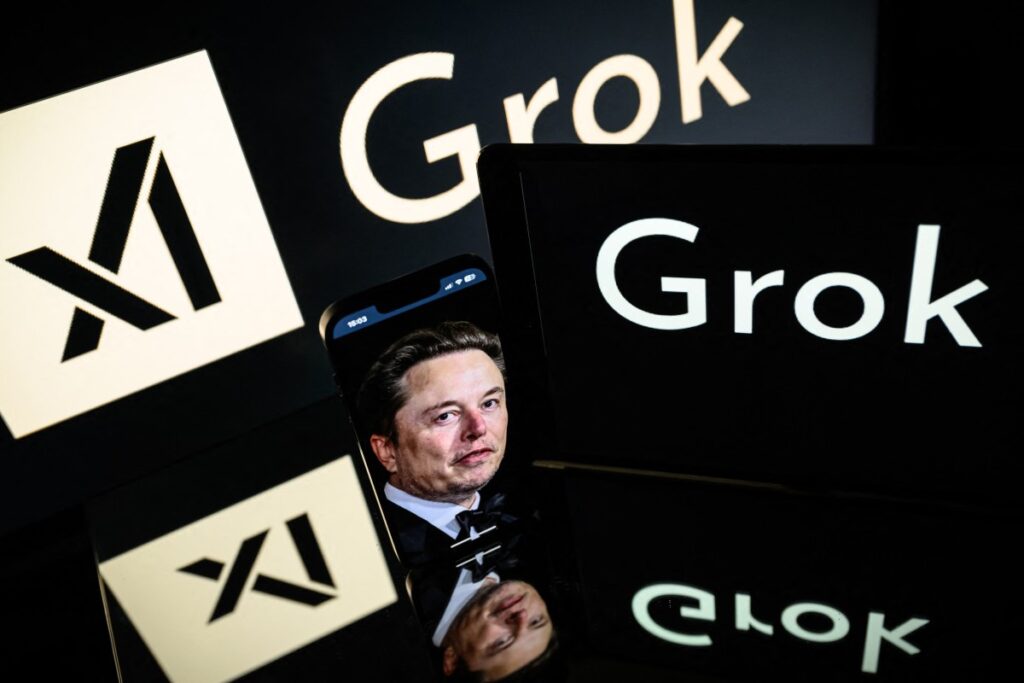
Frontier development includes Alphabet (Gemini 3), OpenAI (GPT + Sora 2), Meta (Llama 4 MoE), and xAI (Grok 4.1). But the report warns of foundation model commoditization, even as infrastructure advantages persist.
Infrastructure leaders include Amazon (Trainium 3), Alphabet (TPU) and Microsoft (Azure scale). Apple stands out in device-side inference and private compute. Recommendation engines — critical for advertising outcomes — are led by ByteDance, Alphabet and Meta; Amazon dominates product recommendation; Tencent shows multi-domain strength.
The implication: model leadership may fluctuate, but hyperscale compute remains durable.
Distribution: The Hardest Barrier
If AI compresses the advantage, the distribution widens it.
Distribution shows the widest dispersion of any category — 11 to 35 out of 40, a 24-point gap. The report describes this as the most durable competitive moat. AI can be licensed. Data can be purchased or aggregated. But reaching billions of users daily requires a decade-long ecosystem building.
Alphabet, Apple, and Meta are cited as globally scaled leaders. Only Apple maintains a presence in China among that trio. Others are regional champions or sector specialists.
Hardware control — phones, wearables, in-vehicle systems — emerges as a forward-looking advantage, particularly for health and location-based advertising.
Commerce: A Bifurcated Market
Transaction/Commerce scores range from 10 to 28 out of 30, revealing a bifurcation: commerce-native platforms scoring 24+, advertising-native players scoring 18–24, and the rest trailing below 18.
Amazon and Alibaba built commerce first, then layered advertising. Alphabet and Meta built advertising systems and facilitate commerce but do not own the checkout.
No company scores 9+ across all three commerce subsegments — infrastructure, ad systems, and advertiser network — underscoring structural tensions between merchant-friendly marketplaces and advertiser-serving monetization engines.
Closed-loop attribution, return on ad spend visibility, and clean-room infrastructure are emerging as central battlegrounds.
Content: Table Stakes, Not Lock-In Yet
Content/Media shows a 19-point range, from 7 to 26. Most platforms now have content. Few have exclusive IP-driven lock-in combined with seamless shoppable integration.
Alphabet’s YouTube delivers scale. ByteDance pairs content volume with algorithmic IP. Amazon integrates content and commerce but relies heavily on Prime bundling. The framework suggests shoppable content and low-churn environments will define next-generation advantage.
No Full-Stack Winner Yet
Strategically, the market is divided into Ecosystem Builders, Specialists, Challengers, and Hardware Heavyweights. No company achieves excellence across all five pillars.
Alphabet leads in breadth but lacks depth in commerce. Amazon dominates transactions but lacks broad social behavioral signals. Apple controls devices but restricts data. Chinese platforms demonstrate domestic integration but face geographic constraints.
By 2030, the report anticipates three to four companies surpassing 135 points, forming a comprehensive intelligence tier. Six to eight specialized platforms may cluster between 95 and 125. Others may fail to close foundational gaps.
The conclusion is less prediction than warning: this is a five-year competition defined by capital allocation, acquisition strategy and execution discipline. For advertisers, the question is no longer where audiences are — but which intelligence systems will decide what those audiences see.
And soon, what their bots buy.