For more than a decade, Doha has been quietly rewriting its global identity. Once defined largely by natural gas and sovereign wealth, Qatar is now positioning itself as the Middle East’s next major hub for technology, digital media, and the creator economy.
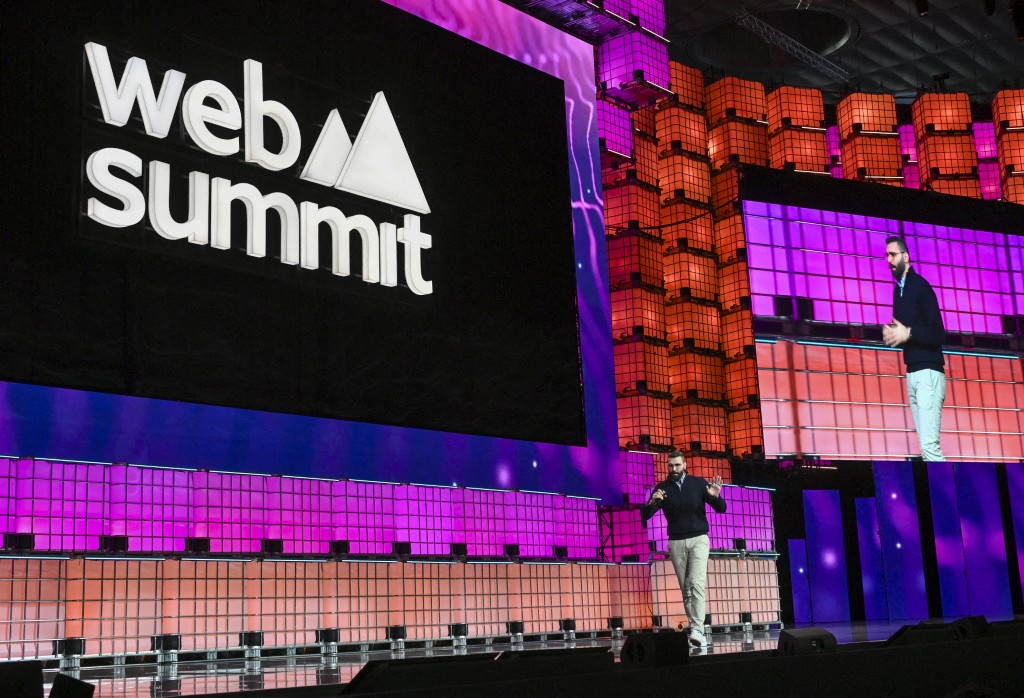
At the center of this shift is a powerful dual engine: Web Summit Qatar, the country’s flagship global tech event, and the Government Communications Office (GCO), its main organizing authority and one of the region’s most influential forces in media, digital platforms, and government advertising.
This transformation is neither accidental nor cosmetic. It is the product of strategic centralization, disciplined nation-branding, targeted incentives, and the deliberate use of global partnerships as accelerators. The outcomes are increasingly visible: Snap has opened a regional office and relocated staff from Dubai, Google has established a presence, Amazon has announced its own office, and a growing number of creators and founders now view Doha as a viable base for building companies and careers.
Web Summit may be the stage, but the GCO is the architect of the larger narrative—and together they are driving Doha’s push to become a creator-driven digital economy.
A Coordinated Pivot
The most underreported driver of Qatar’s rise is the role of the GCO. From January 2025, the office centralized all international advertising spending across Qatar’s government entities, consolidating a portfolio estimated by industry insiders at around $1.5 billion. This has given Qatar something no other regional capital currently possesses: a single, coordinated communications and media-buying engine capable of shaping how global platforms engage with the country.
The impact is already visible. Platforms that once treated Doha as peripheral are now approaching it as a strategic priority. TikTok has explored Doha-based creator events and awards, while Snap’s relocation decision was influenced by Qatar’s long-term policy clarity and institutional alignment. Google and Amazon are following similar logic. For global tech firms, Qatar offers predictability, scale, and a unified point of engagement—a rare combination in emerging markets.
Unlike regional hubs where government entities operate in silos and policy signals are fragmented, Qatar has created an integrated system in which communications, platform relations, and strategic events reinforce one another. The GCO anchors this system; Web Summit amplifies it.
When Qatar signed its five-year partnership with Web Summit in 2023, many observers dismissed it as a branding exercise. In reality, it was part of a broader strategy: to use one of the world’s most influential tech events to shift global attention, attract companies, stimulate investment flows, and embed Doha within global innovation circuits.
The results have been striking. Web Summit Qatar 2024 brought 896 international journalists, generating an estimated $200 million in global media value. The 2025 edition deepened its impact, drawing 25,747 attendees from 124 countries, featuring more than 190 Qatari startups, and recording 47% participation from women-founded startups—positioning Doha as a progressive and inclusive emerging tech hub.
Equally important, Web Summit delivered credibility. Its Lisbon edition regularly attracts over 70,000 attendees and catalyzes hundreds of millions of dollars in startup funding. By partnering with the summit, Qatar plugged itself into that global narrative. As Web Summit founder Paddy Cosgrave remarked, bringing the event to Qatar was “maybe the best decision we’ve ever kind of made.”
From Visibility to Commitment
The real strength of Doha’s approach lies in how Web Summit and the GCO work together. Visibility alone does not build ecosystems; conversion does. While Web Summit generates attention, the GCO uses its centralized spending power and institutional reach to translate that attention into long-term commitments.
Once interest is sparked, founders and creators are guided into accelerators, regulatory pathways, and financing mechanisms through institutions such as Qatar Development Bank and the Qatar Financial Centre. Universities in Education City—including Georgetown, Northwestern, Carnegie Mellon, and HEC Paris—provide talent and research depth. The result is a functioning, if still evolving, flywheel connecting discovery, funding, talent, and platform access.
Qatar’s ambitions extend to the creator economy as platforms move from ad-only models toward monetization and regional production hubs. Doha is positioned as neutral ground between East and West, attracting interest from African, Central Asian, and Southeast Asian creators. Qatar Airways’ global network enhances accessibility, while the GCO’s centralized structure enables long-term platform initiatives rather than one-off campaigns.
The ambition is not to replicate Silicon Valley’s scale, but to build a small, high-value, globally connected innovation hub. Doha’s transformation is still unfolding, but its direction is unmistakable. If momentum holds, it could emerge as the Middle East’s next major digital and creator economy capital—built on coordination, credibility, and execution.